Inquiry
Form loading...

2026 Best Fuel Cells Silicone Hose Manufacturers

The 2026 search for the best Fuel Cells Silicone Hose manufacturers requires more than a polished product catalog. Fuel-cell systems demand stable fluid routing, controlled gas permeability, and reliable performance under heat, pressure, vibration, and chemical exposure. A hose that looks flexible on a sample table may behave differently inside a compact vehicle system.

This guide examines manufacturers through practical engineering evidence. It considers silicone formulation, reinforcement design, dimensional consistency, operating temperature, pressure ratings, and resistance to coolant or hydrogen-related exposure. Factory testing also matters. Useful records include batch traceability, material certificates, aging results, burst tests, and inspection procedures. These details help buyers compare suppliers with greater confidence.

Experience should guide the evaluation.

A capable manufacturer usually explains how its hose is designed, tested, and installed. It should provide clear technical data instead of broad promises. Certifications can support credibility, but they do not replace application-specific validation. Buyers still need to check routing radius, clamp compatibility, connection tolerances, and maintenance conditions.

No supplier is perfect.

Some manufacturers may offer excellent custom engineering but longer delivery times. Others may provide attractive pricing while offering less documentation. That trade-off deserves careful review. This article highlights established selection factors and practical questions for comparing the 2026 market. It does not treat a ranking as permanent, because technology, production quality, and customer support can change. The strongest choice is the manufacturer that matches verified performance with dependable communication and consistent quality.
2026 Best Fuel Cells Silicone Hose Manufacturers

Fuel Cell Silicone Hoses: Definition, Functions, and Key Applications

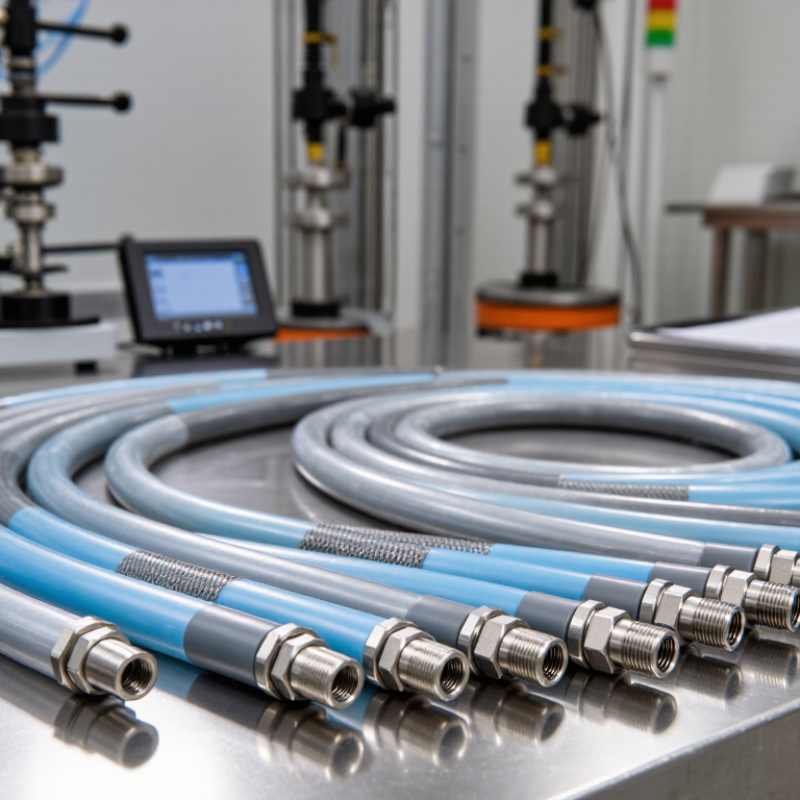
Fuel cell silicone hoses are flexible, heat-resistant tubes used to connect components in a fuel cell system. Their silicone base tolerates repeated temperature changes, vibration, ozone, and engine-compartment exposure. This flexibility helps installers route lines around compact stacks, pumps, radiators, and control units without sharp bends.

Their main functions include transporting coolant, guiding intake air, supporting humidification circuits, and handling selected low-pressure vent paths. A properly designed hose maintains flow while reducing leaks and connection stress. Reinforced layers can improve pressure resistance and prevent collapse under vacuum. Fit matters. An undersized hose can restrict coolant flow, while excessive stretching may weaken its joints.

Applications vary across passenger vehicles, buses, backup power units, and stationary energy systems. Cooling hoses often operate near pumps and heat exchangers, where thermal cycling is severe. Air-management hoses may face moisture, vibration, and changing pressure. Direct hydrogen service requires special care, because silicone alone may not provide sufficient permeation control. A barrier-lined construction may be more suitable, depending on pressure and system design.

Reliable manufacturers should verify compound compatibility, dimensional accuracy, burst strength, vacuum resistance, and thermal aging. Practical validation includes pressure cycling, clamp testing, ozone exposure, and repeated installation checks. Laboratory results are useful, but field feedback often reveals problems earlier. I have found that connection design deserves as much attention as hose material. This detail is sometimes underestimated.

Performance Requirements for Hoses Used in Fuel Cell Systems

Fuel cell silicone hose manufacturers must design for more than temperature resistance. In PEM systems, coolant circuits commonly operate near 60–80°C, while localized heat can rise higher. The U.S. Department of Energy’s Fuel Cell Technical Targets identify 8,000 hours of automotive durability as a key benchmark. Hoses should therefore resist thermal cycling, vibration, coolant additives, and repeated pressure pulses.

Material selection also needs gas-permeation control. Silicone remains flexible at low temperatures and tolerates engine-compartment heat, but its relatively high gas permeability can limit use near hydrogen supply lines. A qualified construction may require reinforcement, barrier layers, or a different elastomer. The International Energy Agency reported in its Global Hydrogen Review 2024 that hydrogen deployment is expanding, yet infrastructure reliability remains a practical challenge. Small leaks matter.

Testing should reproduce real installation conditions. Check burst pressure, vacuum collapse, bend radius, clamp sealing, and coolant compatibility. Pressure cycling should continue after heat aging, not only before it. That detail is often missed. SAE and ISO hydrogen-system guidance also emphasizes controlled materials, connection integrity, and leakage prevention. Suppliers should provide traceable batch records, dimensional inspection, and test results linked to operating limits. One honest weakness remains: laboratory aging rarely captures every vibration pattern found in vehicles. Field validation is still necessary.

How to Evaluate Fuel Cell Silicone Hose Manufacturers in 2026

2026 Best Fuel Cells Silicone Hose Manufacturers

How to Evaluate Fuel Cell Silicone Hose Manufacturers in 2026

Evaluating a fuel cell silicone hose manufacturer requires more than comparing prices. Start with application knowledge. Ask whether the supplier understands coolant circuits, air systems, temperature cycling, vibration, and pressure changes. A capable manufacturer should recommend a suitable silicone compound, reinforcement structure, and wall thickness for your operating conditions. Ask for proof.

Request material data, batch records, and test reports before approving samples. Important checks include tensile strength, elongation, burst pressure, leak resistance, ozone exposure, and thermal aging. For hydrogen-related applications, confirm gas compatibility and permeability performance through documented testing. Do not accept vague claims. Small details matter.

Inspect the production process as well. Reliable suppliers should control mixing, extrusion, curing, dimensional inspection, and final cleaning. Traceability should reach the raw material lot and production date. During sample evaluation, measure inner diameter at several points, then inspect the cut surface for voids or uneven reinforcement. A supplier can look excellent on paper and still disappoint during installation. I have learned that packaging deserves attention too; crushed bends or contaminated ends can ruin a good hose. Communication also reveals competence. Clear answers, realistic lead times, and honest limits are stronger signs than polished presentations. Some evaluations remain imperfect, especially when field data is limited. Record those uncertainties instead of hiding them.

Leading Manufacturer Profiles and Their Product Capabilities

2026 Best Fuel Cells Silicone Hose Manufacturers

Leading manufacturers are distinguished by more than production volume. Strong suppliers combine silicone formulation expertise, controlled curing, and traceable testing. Their profiles should show experience with fuel-cell cooling circuits, air pathways, and hydrogen-related sealing environments. Product capabilities often include multi-layer hose construction, reinforced walls, custom bends, and stable performance across changing temperatures.

Look for evidence, not polished claims. Reliable manufacturers provide hardness ranges, burst-pressure data, permeability results, and dimensional tolerances. Some offer platinum-cured silicone for cleaner fluid systems, while others develop fluorosilicone-lined designs for demanding chemical exposure. Prototype support also matters. A supplier that can review routing drawings may prevent kinks near a hot stack. Yet a detailed catalog can still hide weak batch consistency. That gap deserves attention.

Tips: Request samples from different production lots. Measure inner diameter, wall thickness, and bend recovery. Confirm testing with your coolant, pressure, and temperature profile. Ask how rejected hoses are identified and recorded. Do not assume a familiar silicone grade suits every fuel-cell application.

Manufacturers with dependable capabilities usually explain their test methods without vague language. They can discuss compression set, thermal cycling, ozone resistance, and connector retention in practical terms. Factory audits, inspection records, and responsive technical teams add credibility. Still, no supplier is perfect. Field validation may reveal installation stresses that laboratory testing misses. A careful qualification process should include vibration, repeated thermal cycling, and inspection after assembly.

2026 Best Fuel Cells Silicone Hose Manufacturers - Leading Manufacturer Profiles and Their Product Capabilities

Manufacturer Profile Primary Silicone Hose Construction Typical Temperature Capability Typical Pressure Capability Available Reinforcement Fuel Cell System Applications Key Product Capabilities Common Compliance Options Customization Capability Recommended Selection Focus
Profile A: High-Temperature Specialist Multi-layer platinum-cured silicone with inner and outer heat-resistant silicone surfaces Approximately -60°C to 200°C, depending on compound and design Low- to medium-pressure coolant and air circuits; exact rating depends on diameter and reinforcement Polyester, aramid, or high-strength textile reinforcement Fuel-cell stack coolant lines, hot-air ducts, thermal-management loops, and engine-compartment routing Strong resistance to heat, ozone, ultraviolet exposure, moisture, and coolant aging; suitable for complex routing Automotive and industrial hose test specifications; customer-specific validation protocols Custom lengths, elbows, reducers, wire forms, internal diameters, wall thicknesses, and molded connections Choose when continuous high-temperature exposure and long service life are the main priorities
Profile B: Reinforced Coolant-Hose Producer Extruded silicone tube with multiple textile reinforcement layers Approximately -50°C to 180°C for typical coolant-service designs Medium-pressure capability with pressure ratings defined by size, reinforcement, and operating temperature High-tenacity polyester or aramid braid Coolant circulation between the stack, radiator, pump, heat exchanger, and auxiliary thermal-management components Good flexibility, low compression set, smooth internal bore, and resistance to glycol-water coolants Material and performance testing based on automotive hose, coolant compatibility, and dimensional requirements Custom hose assemblies, formed bends, multi-leg connectors, clamps, and identification markings Choose when coolant compatibility, dimensional stability, and routing reliability are critical
Profile C: Low-Permeation System Supplier Specialized silicone construction combined with a barrier layer or low-permeation inner liner Approximately -40°C to 180°C, subject to the selected barrier material Low- to medium-pressure service for controlled gas and fluid circuits Textile braid, aramid reinforcement, or a composite reinforcement structure Hydrogen-related balance-of-plant connections, humidification circuits, air-management systems, and controlled gas routing Designed to reduce permeation while maintaining silicone flexibility and resistance to environmental aging Hydrogen compatibility evaluation, permeation testing, leak testing, and customer-defined safety requirements Custom liner materials, hose dimensions, end fittings, conductive layers, and validated assemblies Choose when gas retention, leakage control, and documented permeation performance are important
Profile D: High-Flexibility Formed-Hose Manufacturer Flexible silicone hose with molded bends, corrugation, or application-specific geometry Approximately -50°C to 200°C, depending on formulation and wall design Low- to medium-pressure applications; bend geometry and reinforcement affect the final rating Textile reinforcement or unreinforced construction for low-pressure flexible connections Air intake, exhaust-adjacent routing, vibration-isolation connections, and compact fuel-cell module layouts Excellent bendability, vibration absorption, reduced installation stress, and improved packaging flexibility Dimensional inspection, burst testing, impulse testing, and application-specific durability testing 3D-shaped hoses, tight-radius elbows, variable wall thicknesses, molded ports, and integrated locating features Choose when space limitations, vibration isolation, and installation efficiency drive the design
Profile E: Industrial Heavy-Duty Supplier Heavy-wall silicone hose with robust textile reinforcement for stationary or mobile equipment Approximately -60°C to 180°C for standard industrial designs Medium-pressure coolant, air, and water-service capability, subject to product size and construction Multiple polyester or aramid textile layers Stationary fuel-cell generators, backup-power systems, electrolyzer auxiliary equipment, and industrial cooling skids Durable construction, broad size availability, resistance to weathering, and suitability for demanding operating environments Industrial quality systems, pressure testing, material traceability, and customer-specific inspection plans Large-diameter hoses, custom lengths, flanged ends, couplings, clamps, and low-volume prototype production Choose when equipment uptime, durability, and availability in larger diameters are essential
Profile F: Precision OEM Assembly Supplier Application-engineered silicone hose assemblies with controlled dimensions and integrated end connections Approximately -40°C to 200°C, based on the approved compound and assembly design Pressure rating verified at the assembly level through design qualification and production testing Textile braid, aramid reinforcement, molded support sections, or hybrid constructions Automotive fuel-cell systems, commercial vehicles, auxiliary power units, and compact power modules Consistent tolerances, repeatable assembly quality, traceability, leak testing, and production documentation Automotive quality-management systems, PPAP-style documentation, customer drawings, and validation plans Integrated quick connectors, crimped fittings, molded brackets, sensor ports, identification labels, and kitted delivery Choose when repeatability, supply-chain control, and direct integration with an OEM assembly are required

Note: The capability ranges shown are representative industry ranges for silicone hose constructions used in fuel-cell and related thermal-management systems. Actual temperature, pressure, permeation, compatibility, and service-life ratings must be confirmed from the manufacturer’s technical data and validated against the specific media, dimensions, duty cycle, and installation conditions.

Industry Trends Shaping the Future of Fuel Cell Silicone Hoses

Industry Trends Shaping the Future of Fuel Cell Silicone Hoses

Fuel cell growth is pushing hose manufacturers beyond basic heat resistance. The Hydrogen Council’s Hydrogen Insights 2024 identified 1,572 hydrogen projects worldwide, representing about $680 billion in announced investment. Many projects remain uncommitted, however. That uncertainty makes flexible, qualified components more valuable than optimistic forecasts.

Silicone hose development now focuses on thermal cycling, hydrogen permeation, coolant compatibility, and vibration control. In heavy-duty systems, hoses may face repeated temperature changes near metal fittings. A small surface crack can become a serious leak path. Manufacturers are therefore using tighter dimensional controls, reinforced layers, and cleaner production areas. The International Energy Agency reported in its Global Hydrogen Review 2024 that announced low-emissions hydrogen projects could reach nearly 49 million tonnes annually by 2030, yet only a small share had reached final investment decisions. Supply chains must scale carefully.

Testing is becoming more practical and data-driven. Pressure cycling, burst testing, aging tests, and material compatibility checks should reflect real operating conditions. ISO 14687 supports hydrogen quality requirements, while application-specific standards still demand engineering judgment. That gap matters. A hose can pass a laboratory test and still fail after years of vibration. Future manufacturers will need traceable batches, digital inspection records, and clearer service-life data. Cost reduction remains important, but cheaper silicone is not automatically safer.