Choosing China’s best Rubber Exhaust Hose manufacturers and suppliers requires more than comparing prices or catalog photographs. A reliable hose must manage heat, vibration, oil mist, ozone, and repeated movement without cracking or collapsing. The right supplier should explain its rubber compound, reinforcement design, temperature range, pressure limits, and production controls clearly.
Rubber technology author John S. Dick once emphasized, “Performance begins with material selection.” That principle remains practical today. EPDM may suit hot air and exhaust environments, while other compounds may perform better against oil or chemical exposure. Experienced manufacturers should also discuss hose diameter, bend radius, wall thickness, connection style, and installation conditions. Small details matter. A loose clamp can ruin good material.
This guide examines Chinese manufacturers and suppliers through an E-E-A-T-focused lens: practical experience, technical knowledge, industry credibility, and dependable evidence. It considers factory capability, inspection procedures, customization, export experience, sample testing, and after-sales support. Certifications can help, but they should not replace application-specific verification. Ask for test reports, traceability information, and clear warranty terms.
The process is not perfectly simple. Some supplier websites present impressive claims without enough technical detail. Buyers must verify them. A low quotation may hide inconsistent dimensions, weak reinforcement, or limited testing. The strongest supplier is not always the largest one. It is the partner that understands your exhaust system and documents its performance honestly. Expect careful questions. Expect measurable answers. That is where dependable sourcing begins.
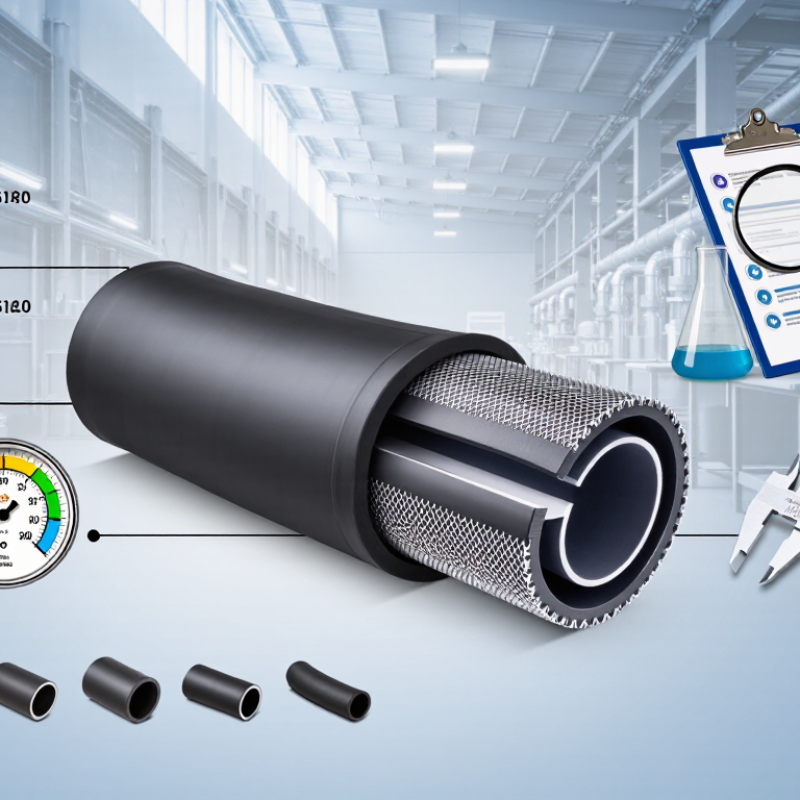
A rubber exhaust hose is a flexible tube that carries hot engine gases away from equipment. It usually has heat-resistant rubber, reinforced layers, and a smooth inner wall. This structure helps reduce vibration and prevents cracks near moving connections. The hose may serve diesel engines, generators, construction equipment, marine engines, and workshop extraction systems. It is not a universal part. Temperature, gas type, pressure, and installation space must guide the selection. A hose can look strong while its inner layer has already hardened.
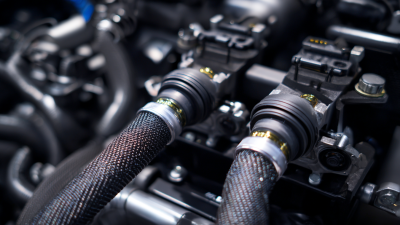
In practical use, rubber exhaust hoses connect an engine outlet to a muffler, ventilation duct, or external discharge point. They are useful where rigid pipes cannot absorb movement. Marine systems often need flexible sections because engines shift slightly on their mounts. Industrial workshops use them to remove fumes from test benches and mobile machinery. Correct routing matters. Avoid sharp bends, direct contact with hot metal, and areas exposed to constant abrasion. The hose should never replace proper ventilation or safety controls.
Tips: Check the working temperature before ordering. Confirm the inner diameter and bend radius. Inspect clamps for even pressure. Look for blisters, stiff areas, discoloration, or loose reinforcement. Supplier test records can support quality decisions, but field inspection remains important. In uncertain conditions, choosing the cheapest hose may create an expensive failure. A second technical review is often worthwhile.
China Best Rubber Exhaust Hose Manufacturers and Suppliers?
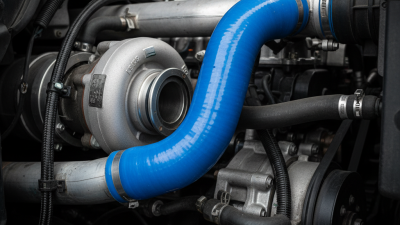
Material selection determines how an exhaust hose survives heat, vibration, and chemical exposure. EPDM rubber suits many coolant and air applications because it resists ozone, weathering, and moderate heat. Silicone rubber handles higher temperatures, but it may perform poorly against oil and fuel. Fluorosilicone or specialized inner layers can improve chemical resistance when contamination is likely.
Reinforcement matters as much as the rubber compound. Polyester fabric supports pressure and dimensional stability. Aramid reinforcement offers stronger resistance with less stretch. A shaped steel helix can help the hose retain its form during bending. However, excessive reinforcement may reduce flexibility. That trade-off is easy to overlook. The hose should also match the required inner diameter, wall thickness, bend radius, and connection method.
Performance testing should reflect the real engine environment. Suppliers need to verify temperature cycling, pressure resistance, vibration fatigue, ozone aging, and clamp-area durability. The hottest point may sit near a metal outlet, not at the hose center. Small surface cracks often appear around clamps first. Visual inspection alone is not enough. Reliable manufacturers should provide compound specifications, dimensional records, batch traceability, and test results. Engineers should compare those records with actual operating conditions rather than choosing only by price. A perfect specification on paper can still fail when routing creates constant tension.
| Performance Dimension | Recommended Material or Construction | Typical Technical Requirement | Verification Method or Reference | Application Significance |
|---|---|---|---|---|
| Inner Tube Material | Heat-resistant silicone rubber, fluorosilicone, or specially compounded EPDM where temperature permits | Material selection shall be based on continuous temperature, peak temperature, exhaust chemistry, and oil exposure | Compound formulation review; thermal-aging and fluid-compatibility testing | Prevents softening, cracking, swelling, and loss of sealing performance during service |
| Silicone Rubber | High-temperature silicone rubber, normally reinforced with polyester, aramid, or fiberglass fabric | Typical service capability: approximately −50 to +180 °C; short-term peaks may reach approximately 200 to 250 °C, depending on construction | Manufacturer temperature rating supported by heat-aging tests | Suitable for hot-air, turbocharger, ventilation, and selected exhaust-adjacent connections; not automatically suitable for direct raw exhaust gas |
| EPDM Rubber | Ethylene-propylene-diene rubber, preferably with heat-resistant compounding | Typical service capability: approximately −40 to +120 °C, with some compounds rated higher for limited exposure | Heat-aging, ozone-resistance, and fluid-compatibility testing | Provides good weathering, ozone, and water resistance, but has limited compatibility with petroleum oils and fuels |
| NBR or Fluorosilicone | Nitrile rubber or fluorosilicone when oil, fuel vapor, or hydrocarbon resistance is important | Temperature and chemical limits must be confirmed for the selected compound; fluorosilicone generally offers better fuel resistance than standard silicone | Immersion testing in the actual oil, fuel, condensate, or cleaning fluid | Reduces swelling and deterioration in oily engine compartments and exhaust recirculation environments |
| Reinforcement | Multiple textile plies using polyester, aramid, or fiberglass; wire helix may be added for vacuum or crush resistance | Reinforcement should be selected to meet pressure, vacuum, bending-radius, and temperature requirements without ply separation | Proof-pressure, burst-pressure, vacuum-collapse, bend, and adhesion tests | Maintains dimensional stability and prevents collapse or burst under dynamic engine movement |
| Temperature Resistance | Heat-resistant elastomer and reinforcement system matched to the actual exhaust-zone location | Design temperature should include continuous operating temperature, transient heat spikes, radiant heat, and under-hood ambient temperature | Thermal cycling and heat-aging tests using the specified temperature profile | Temperature rating is one of the primary factors determining hose life and safety |
| Pressure Capability | Reinforced hose construction appropriate for positive-pressure or low-pressure exhaust applications | Typical low-pressure flexible hose systems may be designed around approximately 0.2–1.0 bar; the actual rating must be determined by the system design | Proof-pressure and burst-pressure testing at the hose assembly level | Prevents leakage, reinforcement damage, and sudden failure during pressure pulses |
| Vacuum Resistance | Wire-supported or specially reinforced construction for suction, ventilation, or negative-pressure service | Hose shall withstand the specified vacuum without kinking, flattening, or permanent deformation | Vacuum-collapse test at operating temperature and minimum bend radius | Important for exhaust extraction, crankcase ventilation, and air-handling systems |
| Chemical Resistance | Compound selected for exposure to water vapor, condensate, diesel or gasoline vapors, lubricating oil, acidic gases, and cleaning agents | Volume change, hardness change, tensile retention, and visual condition should remain within the agreed specification after immersion | Fluid-resistance testing based on ISO 1817 or an equivalent agreed laboratory procedure | Exhaust condensate can be acidic and may accelerate swelling, embrittlement, or corrosion of adjacent components |
| Tensile and Elongation | Fully vulcanized elastomer with consistent wall thickness and strong fabric-to-rubber bonding | Typical rubber quality targets may include tensile strength above 7 MPa and elongation above 200%; final values depend on compound and construction | Rubber tensile test according to ISO 37 or an equivalent specification | Provides flexibility and resistance to tearing during installation, vibration, and thermal movement |
| Hardness | Medium-hard elastomer selected to balance flexibility, sealing, and resistance to extrusion | Common design range: approximately 60–80 Shore A, with the permitted tolerance defined on the purchase specification | Shore A hardness testing according to ISO 868 or ASTM D2240 | Hardness affects clamp sealing, bendability, vibration isolation, and resistance to deformation |
| Flexibility and Bend Radius | Corrugated, convoluted, or multi-ply design where frequent movement or tight routing is required | Minimum bend radius should be stated by the supplier and verified at the intended temperature; the hose must not kink or flatten | Static and dynamic bend testing at room and elevated temperatures | Reduces fatigue cracking caused by engine movement, vibration, and repeated thermal expansion |
| Abrasion and Ozone Resistance | Weather-resistant outer cover with suitable rubber compound and protective fabric where necessary | No visible cracking after the agreed ozone and flexing exposure; outer cover should resist rubbing against nearby components | Ozone testing according to ISO 1431-1 or ASTM D1149; abrasion test by agreed method | Protects the hose from under-hood ozone, weathering, vibration, and contact with brackets or shields |
| Flame and Fire Behavior | Low-flammability or flame-resistant cover when routed near hot exhaust surfaces or ignition sources | Required flame behavior shall be specified according to the vehicle, industrial, or equipment application; no universal rating applies to every hose | Application-specific flame test and regulatory requirement review | Helps limit fire propagation but does not replace heat shields, correct routing, or adequate clearance |
| Dimensional Accuracy | Controlled internal diameter, outside diameter, wall thickness, length, and end geometry | Dimensional tolerances should be agreed on the drawing or purchase specification; ends must be compatible with clamps, beads, or couplings | Calipers, gauges, coordinate measurement, and visual inspection | Accurate dimensions prevent leakage, installation difficulty, excessive clamp force, and flow restriction |
| Leak Tightness | Uniform, defect-free inner tube with properly bonded reinforcement and clean, concentric ends | No visible leakage, blistering, or pressure loss during the specified leak test | Air-under-water, pressure-decay, or helium testing where a higher leak-detection sensitivity is required | Maintains exhaust flow integrity and prevents hot gases or harmful fumes from entering occupied areas |
| Bonding and Delamination | Compatible elastomer, fabric treatment, and vulcanization process | No separation between rubber layers, reinforcement, cuffs, or cover after thermal and flexing exposure | Peel-adhesion, sectioning, visual inspection, and post-aging examination | Delamination can create weak spots, flow restrictions, and rapid failure under vibration |
| Thermal Expansion | Flexible construction with sufficient movement allowance and correct clamp positioning | Hose length and routing should accommodate expected axial, lateral, and angular movement without overstretching | Thermal cycling with simulated engine movement and dimensional measurement | Prevents tensile loading at connectors and reduces fatigue at clamps and joints |
| Surface and Manufacturing Quality | Clean, smooth inner bore; uniform cover; accurately formed ends; no cuts, pinholes, blisters, exposed reinforcement, or foreign material | 100% visual inspection is recommended for critical defects; lot traceability should include compound, date, and curing information | Visual inspection, bore inspection, hardness checks, and production batch records | Consistent manufacturing quality improves reliability and simplifies supplier qualification |
| Standards and Documentation | Application-specific specification supported by recognized rubber, hose, and quality-control methods | Relevant references may include ISO 1817 for fluid resistance, ISO 37 for tensile properties, ISO 868 for hardness, and ISO 1431-1 for ozone resistance | Certificate of conformity, material data sheet, inspection plan, test reports, and sample approval | Clear documentation makes supplier comparison and incoming inspection more objective |
| Note: The numerical values shown are typical engineering ranges for preliminary selection, not universal acceptance limits. Final requirements should be confirmed against the actual exhaust temperature, pressure, vacuum, chemicals, vibration, routing, regulatory requirements, and hose assembly design. | ||||
China manufacturers produce rubber exhaust hoses through controlled compounding, reinforcement, extrusion, and curing. The compound usually combines heat-resistant rubber, carbon black, plasticizers, and protective additives. According to the International Rubber Study Group’s Rubber Statistical Bulletin, global natural-rubber production reached about 14.5 million tonnes in 2023. This supply supports large-scale hose production, but raw material volume does not guarantee quality.
Technicians first mix rubber in an internal mixer. They check temperature, viscosity, and dispersion before extrusion. Fabric or wire reinforcement is then wrapped around the tube. The hose passes through a curing press, often between 150°C and 180°C, depending on the compound.
Tests may follow ISO 188 for accelerated aging, ASTM D412 for tensile strength, and SAE J200 for rubber classification. Manufacturers measure burst pressure, bending resistance, ozone exposure, and dimensional stability.
A 2024 rubber products market analysis by Grand View Research identifies automotive applications as a major demand segment. Yet some factories still rely too heavily on visual inspection. That is a weakness worth questioning.
Tips:
Ask for batch records, compound test results, and aging data. Request samples after curing, not only fresh samples. Check inner diameter at several points. Small variations can restrict exhaust flow. Also confirm whether testing uses actual operating temperatures. Bench results can look reassuring, but field conditions are less polite.
When comparing China-based rubber exhaust hose manufacturers and suppliers, start with the hose’s actual working conditions. Record exhaust temperature, pressure, bend radius, media, and installation space. A supplier should match rubber compounds and reinforcement to those conditions, not simply offer a lower price. Ask for technical data, dimensional tolerances, aging results, and test methods. Vague answers deserve caution.
Request samples from several factories. Inspect the inner bore, wall thickness, surface finish, and clamp fit. Bend each sample repeatedly, then check for cracking, delamination, or permanent deformation. Compare production samples with the approved drawing. Small changes can affect airflow and service life. Ask whether testing is performed in-house or by an independent laboratory. Review calibration records, batch identification, and material traceability. These details show process control.
Factory capability matters. Check extrusion equipment, reinforcement methods, vulcanization control, inspection steps, and packaging. Confirm minimum order quantities, tooling charges, lead times, spare capacity, and replacement policies in writing. Communication should be tested before ordering. Send one detailed question and watch the response. Fast replies are not enough. Specific replies matter more. I once focused too much on unit cost. That was a mistake. Freight, rejected pieces, and delayed installation can change the real price. An audit may reveal storage problems that documents miss. Still, audits are not perfect. Keep evaluating performance after delivery.
Reliable rubber exhaust hose purchasing starts with a clear operating profile. Specify temperature range, pressure, internal diameter, bending radius, and exposure to oil or chemicals. Customization may include length, wall thickness, fabric reinforcement, wire helix, and molded connectors. Fit matters. A hose that looks strong can still collapse under repeated bending.
Certification requires careful checking. Ask for material test reports, dimensional records, batch traceability, and quality-system documentation. Relevant compliance may include RoHS, REACH, or vehicle and industrial standards, depending on the application and destination. Ask for evidence. A certificate alone does not prove consistent production. Review its scope, issuing body, test date, and matching product details. I have seen specifications copied between suppliers, which creates avoidable risks.
Pricing depends on rubber compound, reinforcement, tooling, order volume, packaging, and shipping terms. Price can mislead. The lowest quotation may exclude testing, tooling, or replacement support. Request a sample, production drawing, inspection plan, and written warranty before placing a large order. Compare landed cost, not only unit price. During evaluation, bend the sample repeatedly, inspect the cut edge, and check connector alignment. This practical step often reveals weaknesses that photographs hide. Still, testing one sample is imperfect; batch variation deserves attention. A dependable supplier should explain limitations clearly and provide corrective action records when problems occur.