China Top 10 Rubber Air Hose Manufacturers?
Choosing among China’s top Rubber Air Hose manufacturers requires more than comparing factory photos or listed prices. A reliable hose must survive pressure, abrasion, oil exposure, temperature changes, and repeated bending. Its performance depends on the rubber compound, reinforcement layers, coupling quality, curing process, and inspection records.
Rubber technologist R. P. Brown observed, “A rubber product must be tested under conditions that resemble its service.” That principle guides this review. We examine production experience, material selection, working pressure, burst pressure, temperature range, dimensional consistency, and conformity with recognized standards. We also consider practical details, such as whether a hose remains flexible near a compressor, resists scuffing on concrete, and seals correctly after frequent connection cycles.
Factory scale matters. It is not everything. Some manufacturers offer impressive catalogs but provide limited test evidence or unclear traceability. That weakness deserves attention. A lower quotation may also hide thinner walls, shorter reinforcement, or weaker fittings. These points can become expensive failures in workshops, mines, construction sites, and automated production lines.
The companies discussed in this article are assessed through a buyer’s perspective. Their manufacturing capabilities, export experience, quality systems, customization options, and customer support receive careful consideration. No ranking is permanently perfect. Product performance can vary between models, batches, and application conditions. Buyers should verify current certificates, samples, technical data, and inspection results before placing large orders. This guide aims to make that evaluation clearer, more practical, and less dependent on marketing claims.
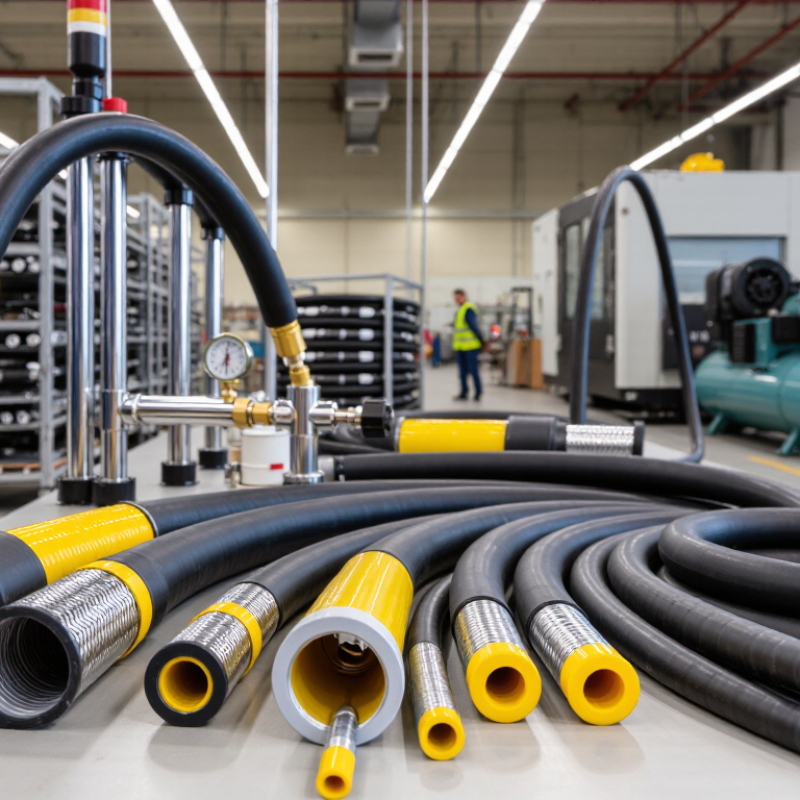
What Defines a Leading Rubber Air Hose Manufacturer in China
China Top 10 Rubber Air Hose Manufacturers?
A leading rubber air hose manufacturer is defined by evidence, not production claims. Grand View Research estimated the global industrial hose market at about USD 15 billion in 2023, with steady growth ahead. This demand raises quality expectations for Chinese suppliers. A capable factory should follow ISO 2398 for textile-reinforced rubber hoses and ISO 1307 for hose dimensions and tolerances. It should also provide batch records, material certificates, and pressure-test results. Working pressure is important. Burst pressure matters more when equipment faces sudden loading. Experienced manufacturers test hoses at controlled temperatures, inspect inner-tube adhesion, and measure bend radius before shipment.
Tips: Request a sample, a recent test report, and the exact reinforcement structure. Check whether the report identifies the batch number. A catalog cannot replace traceability.
In practical sourcing, compare more than price. Ask about compound formulation, ozone resistance, abrasion performance, coupling security, and storage life. A 2024 industry market assessment reported continued demand for durable industrial hoses in construction, manufacturing, and mining. These applications expose weak products quickly. A hose may look smooth yet crack near the fitting after repeated bending. That detail is often missed. Another weakness appears in supplier audits: some factories state “high pressure” without naming test standards or temperatures. This deserves careful questioning. Reliable manufacturers explain limitations clearly, maintain calibrated equipment, and accept third-party inspection. Not every large factory is the best fit. Smaller production lines can sometimes offer stronger technical communication, though capacity may fluctuate.
Key Materials and Construction Standards for Rubber Air Hoses
China Top 10 Rubber Air Hose Manufacturers?
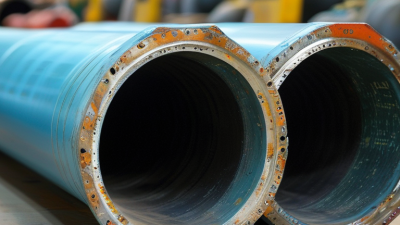
Rubber air hoses depend on careful material selection, not appearance alone. The inner tube commonly uses natural rubber, SBR, or EPDM, depending on oil, heat, and moisture exposure. EPDM handles weather well, but it is unsuitable for many petroleum-based fluids. Reinforcement usually includes textile braid or spiral layers. These layers control pressure expansion and improve flexibility.
The outer cover should resist abrasion, sunlight, ozone, and workshop chemicals. A hose dragged across concrete needs stronger cover protection than one used indoors. Construction standards help verify consistency. ISO 2398 covers rubber hoses for compressed air, while ISO 1307 addresses dimensions and tolerances. Buyers should also check working pressure, burst pressure, temperature range, and minimum bend radius. Standards differ by application.
Small details matter.
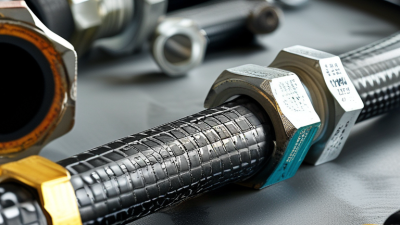
Couplings must match the hose’s pressure rating. Clamps should not cut the cover or restrict the tube. In practical inspections, cracks near fittings often appear before visible damage along the hose. That suggests installation quality matters as much as rubber quality. A manufacturer may list impressive pressure figures, yet testing conditions can vary. Request test reports, batch traceability, and material specifications. I would also question vague claims about “universal” chemical resistance. No rubber compound performs equally well in every environment.
China’s Top 10 Rubber Air Hose Manufacturers
China’s Top 10 Rubber Air Hose Manufacturers are often judged by more than factory size. Reliable producers show consistent rubber compounding, strong reinforcement, and accurate pressure ratings. They also provide traceable batch records and practical technical support.
A serious evaluation should examine working pressure, burst pressure, temperature range, flexibility, and abrasion resistance. Factory visits can reveal details that catalogs hide, such as uneven winding or poor storage conditions. Experienced buyers should request samples and test them under realistic workshop conditions. A top-ten ranking is useful, but it is never completely fixed. Prices, equipment, export experience, and quality controls change over time. Some smaller manufacturers may perform better than larger factories in specific hose applications.
Tips: Check the inner tube material, cover thickness, fitting accuracy, and inspection reports. Ask how rejected products are handled. Request clear tolerances, packaging details, and delivery records. Do not choose by price alone. A cheaper hose may harden quickly, leak at the coupling, or fail during repeated bending. One detail is easy to miss: storage conditions before shipment. Heat and sunlight can quietly reduce rubber performance.
China's Top 10 Rubber Air Hose Manufacturers: Common Product Size Reference
The chart shows commonly traded nominal bore sizes for industrial rubber air hoses. Values are exact inch-to-millimeter conversions based on 1 inch = 25.4 mm. This is a product-specification reference and does not rank or disclose individual manufacturers or brands.
How to Evaluate Quality, Certification, and Export Capability
When comparing China’s top rubber air hose manufacturers, quality should be checked beyond product photographs. Ask for the hose construction, working pressure, burst pressure, temperature range, and minimum bend radius. A reliable supplier should provide production samples, not only a polished catalogue. Bend a sample by hand. Inspect the cover for cracks, uneven thickness, or a strong chemical odor. Small details often reveal unstable compounding or poor curing.
Certification needs careful verification. ISO 9001 shows a quality management system, but it does not automatically prove hose performance. Match the product with applicable standards, such as SAE or EN requirements, and confirm the certificate’s scope, issuing body, and validity. Request test reports for pressure, impulse, abrasion, ozone, and temperature resistance. Reports from an ISO/IEC 17025-accredited laboratory carry stronger technical weight. Still, certificates can become outdated. Recheck them.
Export capability involves more than shipping experience. Review packaging photos, pallet protection, labeling, inspection records, and documentation accuracy. The supplier should explain lead times, sample approval, batch traceability, and how complaints are handled. Check whether cartons arrive dry and fittings remain sealed after transport. Ask for references in your target market, where possible. A low quotation may look efficient, yet inconsistent batches can create costly delays. I would inspect a pre-shipment sample myself, even after a successful trial order. Supplier claims are useful, but physical evidence is better.