Top Tips for Choosing the Best Rubber Air Hose?
When selecting the right rubber air hose, it’s crucial to understand the nuances of the product. John Smith, a leading expert in pneumatic tools, emphasizes, "A quality rubber air hose can significantly enhance your project efficiency." Understanding what makes a rubber air hose superior can save time and improve performance.
The industry offers a variety of options, each with distinct features. Rubber air hoses are known for their flexibility and durability. However, not all hoses are created equal. Some may become stiff in cold temperatures or degrade under heavy UV exposure. These factors can impact your work and equipment.
Choosing the best rubber air hose requires careful consideration. Look for hoses that resist wear and tear. Make sure to evaluate the fitting sizes that fit your tools. A small oversight can lead to significant setbacks. Taking the time to research and choose wisely pays off in the long run.
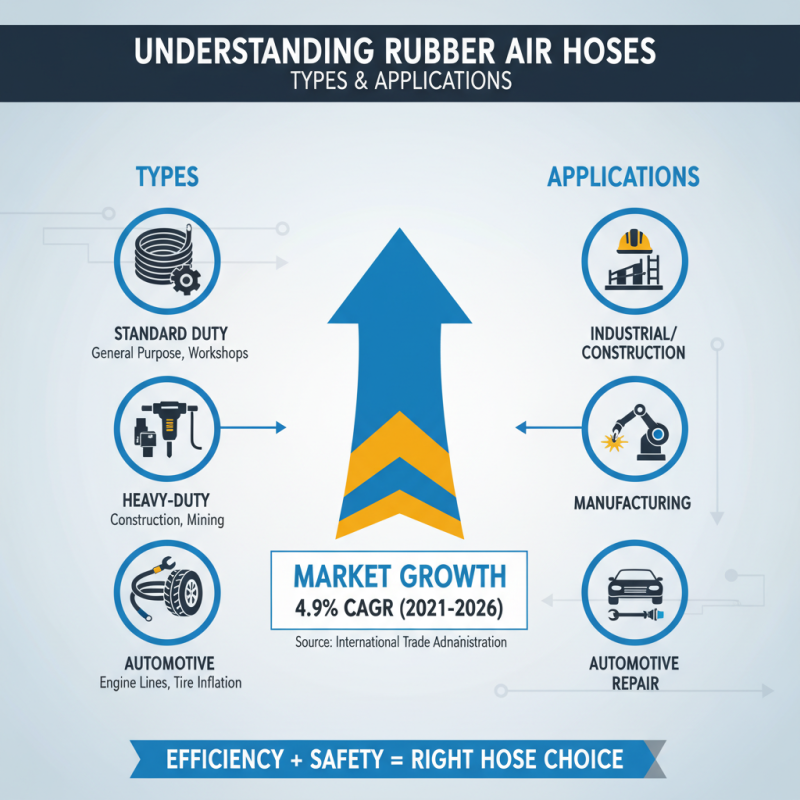
Understanding Rubber Air Hoses: Types and Applications
Rubber air hoses are essential in various applications, from construction to automotive. They come in different types, each designed for specific tasks. A standard lab report from the International Trade Administration revealed that the industrial rubber hose market is projected to grow at a compound annual growth rate (CAGR) of 4.9% from 2021 to 2026. Choosing the right type of hose can greatly impact efficiency and safety.
There are several key factors to consider. First, the temperature range is vital. Some hoses handle extreme heat while others function well in colder environments. Additionally, the wall thickness can determine durability. A thicker hose typically resists wear and tear better. A study published in the Journal of Materials Science showed that hoses with reinforced layers last longer in high-pressure settings.
Applications vary widely. For example, a lightweight air hose is ideal for nailers and spray guns. Conversely, a heavy-duty option suits jackhammers and other high-demand tools. Misjudging the application can lead to frequent replacements or even safety hazards. Understanding the differences between these types can guide better purchasing decisions.
Evaluating Durability and Flexibility in Rubber Air Hoses
When selecting a rubber air hose, durability and flexibility are crucial factors. A robust air hose can withstand wear and tear, extending its lifespan. According to the Rubber Manufacturer's Association, nearly 30% of air hose failures stem from material defects. Understanding the material's quality is vital. Look for reinforced hoses that resist abrasion and kinks. These features are essential in demanding environments, ensuring consistent airflow.
Flexibility also plays a significant role. A hose that remains pliable will perform better in varying conditions. Data indicates that hoses with a lower durometer rating are often more flexible. This flexibility prevents cracks in colder weather and makes handling easier on job sites. For example, hoses rated at 70A durometer show superior flexibility compared to harder counterparts. However, flexibility shouldn't compromise durability. Finding the right balance can be challenging, but assessing these factors ensures better performance.
Investing in the right air hose impacts project efficiency. If a hose frequently fails, it can lead to costly downtime. A study by the National Institute for Occupational Safety and Health highlights that machinery downtime can increase operational costs by up to 15%. Choosing a quality rubber air hose, therefore, requires careful consideration of both durability and flexibility. This decision can significantly enhance productivity and reduce long-term expenses.
Durability and Flexibility Evaluation of Rubber Air Hoses
Assessing Compatibility with Air Compressors and Tools
When selecting a rubber air hose, compatibility with your air compressor and tools is crucial. A mismatched hose can lead to inefficiencies and equipment damage. For instance, industry reports show that hoses with incompatible fittings can reduce air pressure by up to 15%. This loss impacts tools, making them operate less effectively.
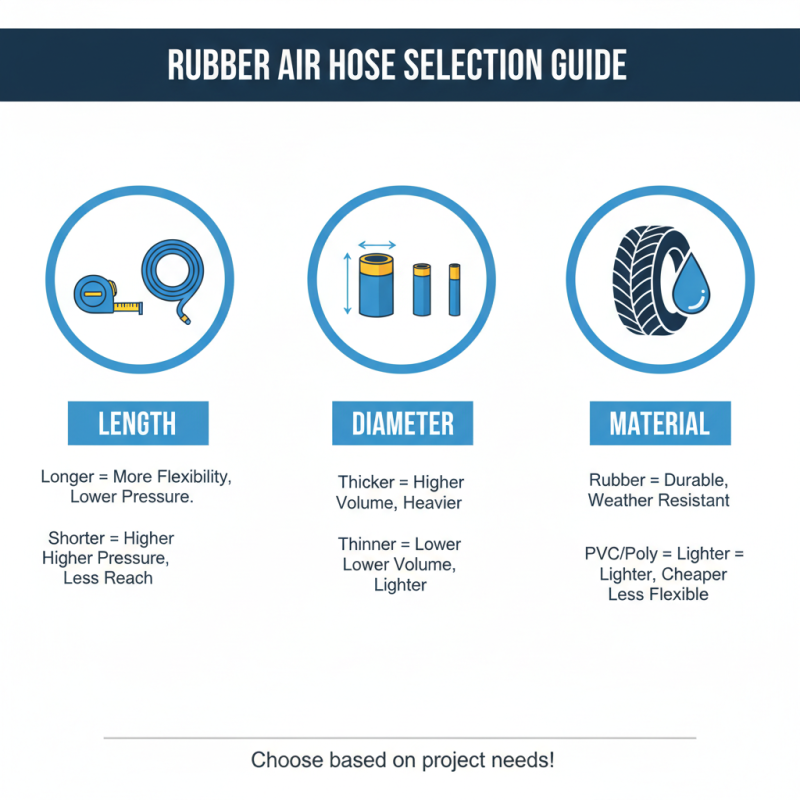
Consider the hose’s diameter and length. The right diameter ensures adequate airflow. A hose that's too narrow restricts airflow, while a longer hose can lead to pressure drops. Research indicates that a 50-foot hose can lose 5-10 PSI of pressure compared to a 25-foot hose. This discrepancy might seem minor but can affect tool performance significantly.
Moreover, assess the hose's temperature and pressure ratings. Operating at higher pressures than recommended can lead to hose failure. Inspect material quality, as some rubber compounds handle heat better than others. Always verify that the hose's specifications match your compressor's requirements to avoid costly errors and ensure safety during operation.
Maintenance Tips for Prolonging the Life of Rubber Air Hoses
Rubber air hoses are essential in various applications, from automotive to construction. To prolong their lifespan, proper maintenance is critical. Regular inspections can help identify wear and tear. According to industry reports, hoses can last over 10 years with optimal care.
One effective tip is cleaning the hoses regularly. Dirt and debris can cause blockages. Use mild detergents and rinse thoroughly. Avoid harsh chemicals that may degrade the rubber. Keeping hoses clean prevents premature failures.
Additionally, storage is crucial. Store hoses away from direct sunlight and extreme temperatures. A coil or reel can prevent kinks and bends. The American Society of Mechanical Engineers recommends storing hoses in a cool, dry place. This prevents damage and deters mildew.
Lastly, avoid over-inflation. Exceeding recommended pressure can lead to blowouts. Check pressure ratings before use.
Maintaining rubber air hoses may require time and effort, but it's worth it for longevity and safety.
Top Tips for Choosing the Best Rubber Air Hose
| Dimension |
Recommendation |
Maintenance Tips |
| Length |
Choose a length that fits your workspace to avoid excess tension. |
Store in a cool, dry place to prevent cracking. |
| Diameter |
Select a diameter that matches your air tools' requirements. |
Regularly check for signs of wear and replace if necessary. |
| Operating Pressure |
Ensure the hose can handle the pressure of your air compressor. |
Avoid bending or twisting the hose while in use. |
| Flexibility |
Pick a hose with good flexibility for ease of use. |
Keep away from sharp edges that might damage the hose. |
| Temperature Range |
Select a hose that can withstand the temperatures of your working environment. |
Avoid exposing the hose to extreme temperatures for prolonged periods. |