Top 10 Food Grade Silicone Hoses for Global Buyers?
In the fast-evolving world of food processing, the choice of materials is crucial. One essential product is the Food Grade Silicone Hose. Experts like Dr. Emily Johnson emphasize its importance: "Food Grade Silicone Hoses are vital for maintaining safety and quality in food transport." This statement highlights the critical role these hoses play in various industries.
Food Grade Silicone Hoses are designed specifically for transporting food and beverages safely. Their ability to withstand high temperatures and resist contamination ensures they meet stringent health standards. Many buyers are unaware of the varying qualities available in the market. Choosing the right hose can be a challenge.
Quality and reliability should be at the forefront of any purchase. Despite their durability, not all hoses perform equally. Potential buyers should be aware of these differences. This awareness can lead to better choices and safer food processing practices. Investing in a high-quality Food Grade Silicone Hose is crucial for any food-related operation.

Overview of Food Grade Silicone Hoses and Their Importance
Food grade silicone hoses play a vital role in various industries, particularly in food processing and beverage production. These hoses are designed to meet strict hygiene standards. They are essential for transporting liquids and materials safely. Their flexibility and durability make them ideal in environments where cleanliness is a priority. Furthermore, they are resistant to heat and can withstand a wide range of temperatures.
Understanding the importance of these hoses involves more than just their physical capabilities. It is crucial to recognize the implications of using subpar materials. Poor-quality hoses can lead to contamination, impacting both safety and quality. Regular inspections and careful selection of materials can help mitigate such risks. Buyers often need guidance on choosing the right silicone hose that meets their specific needs.
Industry professionals emphasize the benefits of investing in high-quality silicone hoses. These hoses not only improve workflow but also ensure compliance with health regulations. Nevertheless, the selection process can be challenging. It requires knowledgeable input to navigate specifications and certifications effectively. Making the right choice ultimately contributes to the reliability of the entire operation.
Top 10 Food Grade Silicone Hoses - Performance Comparison
Key Features to Consider When Selecting Food Grade Silicone Hoses
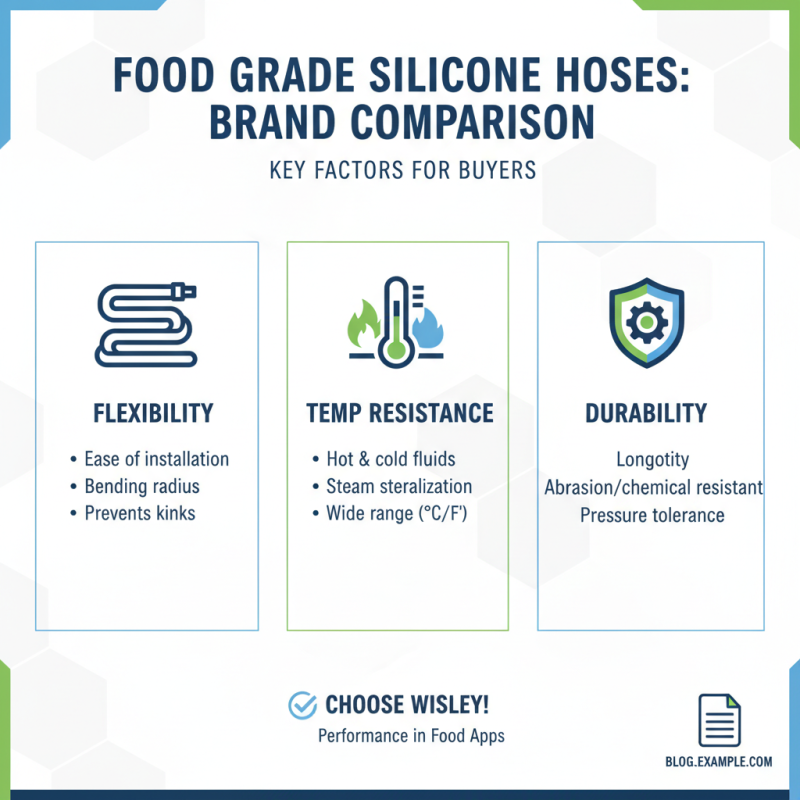
Selecting food grade silicone hoses requires careful consideration of several key features. The material must be non-toxic and compliant with safety regulations like FDA approval. These hoses should also resist extreme temperatures, often ranging from -60°C to 200°C. Robust flexibility and pressure tolerance are essential. Additionally, check the smoothness of the inner surface, as it reduces the risk of bacteria buildup. According to industry reports, poor hygiene can lead to contamination, risking food safety.
When choosing silicone hoses, pay attention to their durability. Many hoses face wear over time, especially in high-stress environments. It's crucial to select hoses that can handle repeated use without degrading. Transparency is another feature worth considering, as it allows for easy visual inspection of the flow.
Tips: Always check for certifications. Look for hoses tested against high-pressure standards. This ensures safety in varied applications. Don’t overlook proper installation as poor fittings can cause leaks and facilitate contamination. Regular maintenance is essential, as even the best hoses can suffer from unseen wear.
Top 10 Recommended Food Grade Silicone Hoses for Various Applications
Food grade silicone hoses are essential in various applications. They are safe for transporting food, beverages, and other consumables. The flexibility and heat resistance make them ideal for many industries. Several factors determine the best choices for global buyers. These include durability, flexibility, and temperature tolerance.
The top recommended hoses often feature reinforced construction. This ensures they withstand high pressures and tight bending without damage. Users appreciate their medical-grade silicone, which ensures safety. Some hoses are designed for specific uses, such as drink dispensing or pharmaceutical applications. The smooth interior reduces the risk of bacterial growth, a critical feature in food safety.
However, not all products meet every need. Buyers might find some hoses too rigid for their requirements. Others may experience issues with specific temperatures. Evaluating each product based on individual needs is vital for optimal performance. Ensuring proper maintenance and cleaning practices can prolong their lifespan. Choosing the right food grade silicone hose enhances efficiency in operations while ensuring safety and compliance.
Maintenance and Care Tips for Maximizing Silicone Hose Lifespan
To maximize the lifespan of food-grade silicone hoses, regular maintenance is essential. Research indicates that silicone hoses can last between five to ten years with proper care. They resist high temperatures and chemical degradation, but exposure to certain environmental factors can shorten their longevity. Regularly inspecting hoses for signs of wear, such as cracks or discoloration, helps in early detection of issues.
Cleaning silicone hoses is crucial. A mixture of warm water and mild soap is effective. It's important to avoid harsh chemicals that can break down the silicone material. After cleaning, ensure thorough drying to prevent moisture build-up, which can lead to mold growth. Neglecting these simple tasks may lead to significant replacements, incurring extra costs and downtime.
Proper storage also plays a vital role in maintenance. Avoid coiling hoses too tightly, as this can create stress points. Instead, store them in a cool, dry place, away from direct sunlight. Over time, improper storage can cause irreversible damage. Thus, taking a few mindful steps can significantly extend the life of silicone hoses.
Top 10 Food Grade Silicone Hoses for Global Buyers
| Silicone Hose Type |
Temperature Resistance (°C) |
Inner Diameter (mm) |
Length (m) |
Max Pressure (bar) |
Color Options |
| Straight Silicone Hose |
-60 to 200 |
16 |
1 |
10 |
Blue, Red, Black |
| Silicone Elbow Hose |
-60 to 200 |
25 |
0.5 |
8 |
Clear, Blue |
| Silicone Vacuum Hose |
-40 to 200 |
10 |
2 |
5 |
Red, Green |
| Silicone Turbo Hose |
-60 to 220 |
19 |
1.5 |
15 |
Black, Blue |
| Silicone Reducer Hose |
-60 to 200 |
30 to 25 |
1 |
12 |
Transparent, Red |
| Silicone High Temp Hose |
-50 to 260 |
15 |
3 |
6 |
Blue, Black, Yellow |
| Silicone Heater Hose |
-40 to 180 |
22 |
4 |
10 |
Red, Black |
| Silicone Braided Hose |
-60 to 200 |
12 |
1 |
8 |
Black, Clear |
| Silicone Fuel Hose |
-30 to 150 |
10 |
2 |
6 |
Blue, Yellow |
| Silicone Spa Hose |
-40 to 140 |
35 |
2.5 |
4 |
Green, Blue |