Inquiry
Form loading...

7 Tips for Choosing the Right Truck Silicone Hose?

Truck silicone hose selection is not a cosmetic upgrade. It affects coolant flow, pressure control, heat management, and roadside reliability. A hose may look strong on a clean workbench, yet soften beside a turbocharger. That contrast matters on loaded vehicles. The U.S. Department of Energy’s Transportation Energy Data Book shows that freight trucks remain major energy users. Their demanding duty cycles make preventive maintenance especially important.

Industry research supports this wider view. Grand View Research’s Automotive Hoses Market report identifies strong demand for hoses that tolerate heat, pressure, and extended service conditions. However, market growth does not guarantee a correct fit. SAE J20 and truck manufacturer specifications remain practical reference points for coolant hose performance and dimensions. A catalog description alone is not enough.

This guide presents seven practical checks before purchasing a Truck Silicone Hose. We examine temperature range, pressure rating, bore size, reinforcement, coolant compatibility, bend radius, and installation space. Measure the old hose, including its formed angle. Inspect clamps, abrasion marks, and nearby heat shields. Small details reveal large risks. A perfect selection is not always possible when technical data is missing. Pause there. Request test documentation, and acknowledge uncertainty. Even experienced technicians can overlook vibration or thermal cycling. These recommendations combine manufacturer guidance, workshop realities, and published industry evidence. Use them as a disciplined starting point, not a promise that every hose fits every truck.

7 Tips for Choosing the Right Truck Silicone Hose?

Define the Hose’s Intended Use and Operating Conditions

Define the hose’s intended use before comparing sizes, colors, or prices.

A coolant hose faces different stresses than a charge-air hose. Record the fluid, peak temperature, working pressure, vacuum level, and engine movement.

The European Environment Agency reported that heavy-duty vehicles produced about 27% of European road-transport carbon dioxide emissions in 2022. That figure reflects demanding duty cycles, long operating hours, and frequent thermal changes. Your hose must survive the actual route, not only a workshop test.

SAE J20 provides useful guidance for automotive coolant hose performance, while ASTM D2000 helps classify elastomer resistance. Use these references, but verify the supplier’s test data for the exact construction.

Check whether the hose will contact coolant, oil mist, fuel vapor, or cleaning chemicals. Silicone performs well across broad temperature ranges, but it is not automatically suitable for every fluid. A perfect-looking hose can still soften internally.

Measure the bend radius, nearby heat sources, clamp position, and allowance for engine movement. Leave no sharp rubbing point. In field inspections, loose clamps and over-bent sections often appear before visible cracking. That observation is easy to overlook. Select reinforcement layers according to pressure pulses, then confirm burst and impulse ratings. I would also request test results after thermal cycling, because a static pressure number tells only part of the story.
Match the Silicone Hose to Truck System Requirements

7 Tips for Choosing the Right Truck Silicone Hose

Match the Silicone Hose to Truck System Requirements

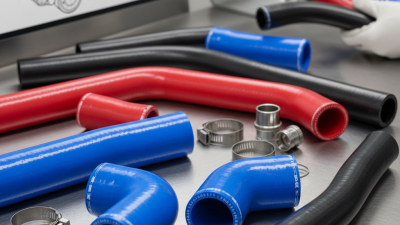
Start by identifying the truck system. Coolant, charge-air, vacuum, and exhaust-adjacent lines need different hose properties. A hose that works for coolant may fail quickly with oil exposure. Check the fluid, operating temperature, and pressure before measuring anything.

Measure the inside diameter carefully. Even a small mismatch can cause leaks or restricted flow. Confirm the hose length, bend radius, and connection angle. Tight bends often need an elbow hose, not forced straight tubing. Count the reinforcement layers when pressure spikes are possible. More layers can improve stability, but they may reduce flexibility. That trade-off is easy to miss.

Review the manufacturer’s temperature and pressure ratings under real working conditions. Engine bays can become harsh, especially near hot metal and limited airflow. Select suitable wall thickness for vibration and abrasion. Inspect the surface for rubbing points, oil contact, and clamp damage. Use compatible clamps, tightened evenly without cutting the silicone. I once saw a correctly sized hose fail because the clamp sat too close to its edge. Small details matter. Before installation, compare the new hose with the original routing, but do not copy it blindly. Truck layouts change, and older routing may already be causing stress. Recheck after the first few operating hours. The installation may look perfect and still need adjustment.

Check Hose Size, Shape, and Connection Compatibility

Choosing a truck silicone hose starts with accurate measurements, not visual guesses. In workshop inspections, inner diameter causes many avoidable failures. Measure the pipe’s outside diameter with calipers. Select a hose inner diameter that grips firmly without forcing it. Check wall thickness too. Thin walls may collapse under suction. Oversized hoses can leak at the clamp. Measure twice. Record the numbers.

Shape matters when engine components move and vibrate. A straight hose may kink where an elbow is required. Match the bend angle, leg lengths, and available space. Check the hose length after routing, not before installation. A hump section can absorb movement, but it still needs clearance. Keep the hose away from sharp edges, hot surfaces, and rotating parts. Leave room for thermal expansion. This detail is easy to miss.

Connection compatibility deserves a separate check. Confirm both end diameters, pipe beads, reducer steps, and clamp width. A clamp must sit behind the bead, not on the hose edge. Inspect the mating pipe for rust, dents, oil, or rough welds. Clean surfaces improve sealing. Test the assembled route by hand before tightening. If alignment feels forced, the hose shape or size is probably wrong. I once saw a nearly correct hose fail because one end was slightly short. Close is not always correct. Ask for technical data when dimensions remain uncertain.

7 Tips for Choosing the Right Truck Silicone Hose

Check hose size, shape, connection compatibility, temperature resistance, pressure rating, reinforcement, and inspection condition before installation.

The chart shows a practical evaluation weighting for truck silicone hose selection. Size, shape, and connection compatibility receive the highest priority because incorrect dimensions or fittings can cause leaks, restricted airflow, and installation failure. Always confirm the required operating temperature, pressure, and hose specifications with the vehicle or equipment requirements.

Evaluate Temperature, Pressure, and Chemical Resistance

7 Tips for Choosing the Right Truck Silicone Hose

Tip 1: Check the full temperature range, not only the engine’s average temperature. Silicone hoses often tolerate high heat, but repeated cold starts can still cause fatigue. Review continuous, peak, and ambient temperatures. SAE J20 provides performance guidance for coolant hose applications, but it does not replace vehicle-specific testing.

Tip 2: Match pressure carefully. A hose may survive high burst pressure yet fail under constant working pressure, vibration, or pressure pulses. Ask for working-pressure data at the actual temperature. Tip 3: Measure chemical exposure. Coolant, cleaning fluids, oil mist, and fuel vapors can affect rubber differently. ASTM D471 measures changes after fluid immersion, including swelling, hardness, and tensile strength. This data is useful, but real engine-bay exposure is less predictable.

Tip 4: Inspect the hose structure. Reinforcement layers influence pressure stability and shape retention. Tip 5: Confirm bend radius and fitting size. A tight bend can flatten the passage and create hot spots. ISO 1817 also helps compare rubber resistance to selected liquids. Do not assume “silicone” means universal chemical resistance. That assumption is common, and sometimes costly. Tip 6: Request aging and impulse-test results. Tip 7: Keep a small safety margin for temperature and pressure. Perfect predictions are rare. Vehicle routing, clamps, and maintenance habits can change the result. Recheck the selection after real-world inspection, especially near turbochargers and exhaust components.

7 Tips for Choosing the Right Truck Silicone Hose: Evaluate Temperature, Pressure, and Chemical Resistance
Tip Evaluation Dimension Typical Data or Benchmark What to Check Selection Guidance
1Confirm the Temperature Range Continuous and peak operating temperature Many silicone hoses are suitable for approximately −50°C to +180°C continuously. Some constructions may tolerate short-term peaks near +200°C, subject to the manufacturer’s specification. Measure the actual fluid and external ambient temperatures, including cold starts, turbocharger heat, engine-bay heat, and shutdown conditions. Choose a hose whose specified continuous temperature rating exceeds the normal operating temperature. Do not use a short-term peak rating as a continuous rating.
2Match the Pressure Rating Working pressure, surge pressure, and vacuum Pressure capability varies with diameter, wall construction, reinforcement, temperature, and connection method. A reinforced hose may commonly handle several bar of working pressure, while the exact value must come from its pressure rating. Record normal pressure, pressure spikes, pulsation, vacuum conditions, and the highest temperature occurring at the same time. Select a hose with a working-pressure rating above the maximum system pressure and consider an appropriate safety margin. Never rely only on burst pressure.
3Check Chemical Compatibility Resistance to coolant, water, air, and fluids Silicone generally performs well with hot air, water, and many water-glycol coolants. It is generally not the preferred material for continuous contact with petroleum fuels, diesel, transmission fluid, or mineral oils unless a compatible liner is specified. Identify every fluid, additive, cleaning agent, and vapor that may contact the inner tube or outer cover. Use a documented compatibility chart and verify concentration, temperature, exposure time, and pressure. Consider a fluoropolymer-lined construction for aggressive fluids when approved for the application.
4Select the Correct Reinforcement Strength, flexibility, and pressure stability Common reinforcement materials include polyester, aramid, and other high-strength fibers. More reinforcement layers can improve pressure resistance but may reduce flexibility and increase bend stiffness. Compare the hose construction with the required pressure, bend radius, vibration level, and available installation space. Use reinforced hose for pressurized intake, charge-air, coolant, and turbocharger systems. Choose reinforcement appropriate to the operating temperature and pressure.
5Verify Size and Connection Fit Inside diameter, outside diameter, wall thickness, and coupling geometry A hose that is too small can restrict flow and increase pressure loss. A hose that is too large may not seal correctly. Nominal hose size should match the actual tube or fitting dimensions. Measure the fitting outside diameter, required hose inside diameter, insertion length, bead position, clamp width, and available clearance. Use the correct inside diameter and avoid stretching the hose over an undersized fitting. Maintain the specified insertion length and use clamps designed for the connection.
6Evaluate Flexibility and Vibration Bend radius, engine movement, abrasion, and fatigue Silicone remains flexible across a broad temperature range, but its minimum bend radius depends on diameter, wall thickness, reinforcement, and hose design. Tight bends can cause kinking and localized stress. Check engine movement, vibration frequency, hose routing, contact points, heat sources, and nearby sharp edges. Choose a formed or elbow hose where required, keep bends gradual, and provide adequate clearance. Add abrasion protection or a support bracket where rubbing or excessive movement may occur.
7Review Standards and Service Life Quality control, inspection, and replacement planning Service life depends on temperature, pressure cycling, fluid exposure, ozone, ultraviolet radiation, abrasion, and installation quality. Visual inspection can identify cracks, swelling, soft spots, cuts, or exposed reinforcement. Request dimensional tolerances, pressure and temperature ratings, material information, traceability, and applicable test documentation. Establish inspection intervals based on vehicle duty cycle. Replace the hose if it shows cracking, blistering, excessive softening, permanent deformation, leakage, or reinforcement damage.
Important: The values shown are general engineering guidance rather than a universal rating. Always confirm the selected hose’s exact temperature, pressure, vacuum, chemical-compatibility, bend-radius, and installation limits against the applicable technical datasheet before installation.

Compare Quality, Service Life, and Installation Requirements

Choosing the Right Truck Silicone Hose: Compare Quality, Service Life, and Installation Requirements

A durable hose starts with verified material quality. Check the silicone grade, reinforcement layers, wall thickness, and working-pressure rating. SAE J20 provides established performance classifications for engine-cooling hoses. Use its requirements as a baseline, not as a substitute for application testing. Many silicone formulations tolerate approximately -60°C to 180–200°C, but the actual limit depends on compound design and pressure. Ask for test data covering heat aging, burst pressure, and coolant compatibility. Certification without test details is not enough.

Service life depends on heat cycles, vibration, oil exposure, and installation stress. ASTM D573 describes accelerated heat-aging methods for rubber materials. It can reveal property loss, but laboratory aging cannot copy every truck route. That limitation matters.

Inspect for soft spots, surface cracks, swelling, and flattened bends during scheduled maintenance. A hose that looks clean may still be internally weakened. Replace clamps when they lose tension or cut into the cover. Cheap clamps often create expensive leaks.

Installation requires equal attention. Measure the route with the engine cold, then check movement at operating temperature. Keep the hose away from sharp brackets, exhaust heat, and rotating parts. Avoid forcing a short hose into position. It may fit today, then fail under vibration. Leave enough clearance for engine movement, while preventing unsupported sagging. Follow the supplier’s torque guidance and clean the fittings before assembly. The 2023 Fleet Maintenance Shop Outlook highlights preventive maintenance as a major reliability priority, yet field decisions still rely too heavily on visual inspection. That habit deserves reconsideration.