Inquiry
Form loading...

China Top 10 Elbow Silicone Hose Manufacturers

China’s top Elbow Silicone Hose manufacturers serve demanding automotive, industrial, medical, and fluid-transfer applications. Their products must bend sharply without collapsing, leaking, or losing shape. That sounds simple. It is not.

Grand View Research reported that the global silicone market reached approximately USD 20 billion in 2023. MarketsandMarkets also forecasts strong growth for silicone elastomers through 2028. These figures indicate rising demand for heat-resistant, flexible components. However, market growth does not automatically prove manufacturing quality. Buyers still need to examine compound formulas, reinforcement layers, curing methods, dimensional control, and batch testing.

Rubber materials specialist Dr. John L. McKeen wrote, “Silicone rubber retains useful flexibility over a broad temperature range.” This property explains why Elbow Silicone Hose is used near engines, compressors, ovens, and chemical-processing equipment. Yet temperature resistance is only one part of the decision. Poor routing can create stress at the bend. Weak clamps can damage the tube. A glossy surface can hide inconsistent wall thickness.

This guide evaluates ten Chinese manufacturers through practical indicators. These include production experience, customization capability, pressure performance, quality systems, export service, and industry certifications. ISO 9001 may support process consistency, while IATF 16949 can matter for automotive supply chains. Certifications should still be verified.

No ranking is perfect. Supplier strength changes with equipment, management, and project type. A factory producing excellent radiator hoses may not suit pharmaceutical applications. Readers should compare samples, test reports, lead times, and communication before choosing an Elbow Silicone Hose partner.
China Top 10 Elbow Silicone Hose Manufacturers

Definition and Applications of Elbow Silicone Hoses

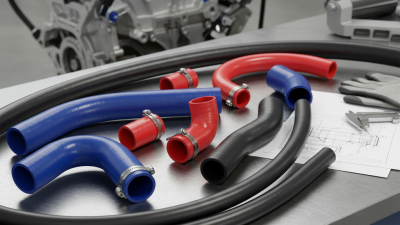
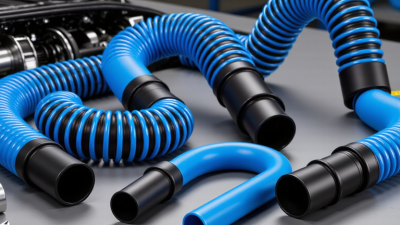
An elbow silicone hose is a flexible, heat-resistant tube shaped for angled connections. It links engines, radiators, intercoolers, air systems, and industrial equipment. Its curved form reduces routing space and avoids sharp bends in crowded compartments. Silicone tolerates vibration and repeated temperature changes better than many ordinary rubber compounds.

According to Fortune Business Insights’ 2024 Silicone Market report, the global silicone market reached about USD 18.31 billion in 2023. It may grow to USD 30.68 billion by 2032. This expansion reflects rising demand from automotive and industrial applications. Elbow hoses often operate between -50°C and 200°C, although exact limits depend on reinforcement and compound design. Pressure performance also varies. A thicker wall is not automatically safer. Poor clamping can still cause leaks, especially near the elbow.

Tips: Measure the outside diameter carefully. Check the temperature range, pressure rating, bend radius, and fluid compatibility. Choose reinforced layers for boosted air systems. Keep clamps away from hose edges. Inspect soft spots, cracks, and oil swelling during maintenance. SAE J20 guidance can support specification work, but it should not replace equipment-specific testing. Real installations are rarely perfect; heat shields, alignment, and access often need practical adjustment.

China Top 10 Elbow Silicone Hose Manufacturers - Definition and Applications of Elbow Silicone Hoses

No. Elbow Hose Type Typical Angle Typical Size Range Construction Typical Temperature Range Main Applications Key Performance Requirements
1 45° Elbow Silicone Hose 45° 19–102 mm ID Multi-layer silicone with polyester reinforcement Approximately −50°C to 180°C Cooling circuits, air intake routing, and compact pipe transitions Smooth airflow, controlled bending radius, and resistance to heat and ozone
2 90° Elbow Silicone Hose 90° 19–152 mm ID Reinforced silicone rubber with molded elbow geometry Approximately −50°C to 180°C Engine cooling, charge-air systems, generators, and industrial equipment Dimensional stability, pressure resistance, and reliable clamp sealing
3 135° Elbow Silicone Hose 135° 25–127 mm ID Flexible silicone tube with multiple fabric reinforcement layers Approximately −50°C to 180°C Complex vehicle layouts, air ducts, and offset connections Flexibility, low collapse under bending, and vibration tolerance
4 180° U-Shaped Silicone Hose 180° 25–102 mm ID Molded silicone with anti-kink reinforcement Approximately −50°C to 180°C Tight-radius coolant routing and return-line connections Resistance to kinking, fatigue, and repeated thermal cycling
5 Reducer Elbow Silicone Hose 45° or 90° 19–152 mm ID Stepped, reinforced silicone construction with different end diameters Approximately −50°C to 180°C Connecting pipes, ports, or components with unequal diameters Accurate end dimensions, concentricity, and uniform wall thickness
6 Vacuum-Rated Elbow Silicone Hose 45° or 90° 13–76 mm ID Thick-wall silicone with spiral or fabric reinforcement Approximately −50°C to 180°C Vacuum lines, ventilation systems, and suction applications Resistance to collapse, low air leakage, and stable vacuum performance
7 High-Pressure Elbow Silicone Hose 45° or 90° 25–127 mm ID Several silicone layers reinforced with high-strength textile fabric Approximately −50°C to 180°C Turbocharger, supercharger, and compressed-air piping Burst resistance, low expansion, and secure retention at high boost pressure
8 Coolant Elbow Silicone Hose 45°, 90°, or 180° 19–102 mm ID Heat-resistant silicone suitable for water and glycol-based coolant Approximately −50°C to 180°C Radiators, water pumps, heat exchangers, and battery cooling systems Coolant compatibility, thermal aging resistance, and leak prevention
9 Food-Grade Elbow Silicone Hose 45° or 90° 6–102 mm ID Platinum-cured silicone with a smooth, non-porous inner surface Approximately −50°C to 180°C Food, beverage, dairy, pharmaceutical, and cosmetic processing Cleanability, low extractables, odor neutrality, and hygienic design
10 Medical and Laboratory Elbow Silicone Hose 45° or 90° 3–50 mm ID High-purity silicone with smooth bore and controlled surface finish Approximately −50°C to 180°C Laboratory fluid transfer, peristaltic systems, medical equipment, and sterilization lines Biocompatibility where required, flexibility, sterilization tolerance, and low particle generation

Note: Temperature, pressure, size, and compliance limits vary according to hose construction, reinforcement, fittings, and application conditions. Always verify the technical specification before selection.
Key Criteria for Evaluating Chinese Silicone Hose Manufacturers

China Top 10 Elbow Silicone Hose Manufacturers

When evaluating Chinese elbow silicone hose manufacturers, material control should come before price. Grand View Research reports that the global silicone market may grow at about 7% annually through 2030. This expansion increases demand for consistent, heat-resistant components. Ask for silicone grade, reinforcement structure, hardness range, and working-temperature data. A reliable supplier should provide batch records, test results, and clear dimensional tolerances. Small variations can cause leaks at tight bends.

Production evidence matters more than attractive catalogs. Request samples with measured inner diameter, wall thickness, bend angle, and burst pressure. Check whether testing follows recognized methods, such as ISO 1402 for hose hydrostatic pressure. For automotive applications, IATF 16949 certification can indicate stronger process discipline, but certification alone proves little. Audit calibration records, cure controls, trimming quality, and traceability. I have found that unfinished hose ends often reveal more than polished samples.

Market reports from Fortune Business Insights indicate continuing growth in silicone-related industrial applications, especially transportation and machinery. Manufacturers serving these sectors should explain aging tests, compression resistance, and resistance to coolant, oil mist, and temperature cycling. Export experience also deserves scrutiny. Confirm packaging, inspection frequency, change-control procedures, and complaint response times. A low quote may reflect thinner reinforcement or weaker testing. That possibility is easy to overlook. Do not assume the largest factory is the safest choice; verified process evidence is more useful than factory size.

Top 10 Elbow Silicone Hose Manufacturers in China

Top 10 Elbow Silicone Hose Manufacturers in China

China’s top ten elbow silicone hose manufacturers are often judged by more than production volume. Their capabilities include 45-degree and 90-degree bends, custom inner diameters, reinforced walls, and stable curing control. A reliable factory should provide clear material specifications, dimensional tolerances, and batch traceability.

In practical sourcing work, I inspect hose samples under bright light. Smooth inner walls matter because rough surfaces can disturb airflow and collect residue. I also check bend recovery, clamp fit, and resistance to heat, pressure, oil mist, and coolant. Good manufacturers usually support prototype development and provide test reports from controlled production batches.

Small details reveal process quality. A clean cut edge helps prevent installation damage. Consistent wall thickness reduces weak points around the elbow. However, a polished sample does not prove every shipment will match it. This is where many evaluations become too optimistic. Buyers should compare several batches, review inspection records, and confirm packaging protection before placing large orders. Communication also matters, especially when drawings change or measurements are unclear. Be precise. A capable Chinese supplier may offer flexible tooling, but flexibility still requires documented approval and repeat testing.

Product Standards, Materials, and Manufacturing Capabilities

China Top 10 Elbow Silicone Hose Manufacturers

Evaluating leading elbow silicone hose manufacturers requires more than comparing catalog photos. Product standards reveal process discipline. ISO 1307 can guide dimensions and tolerances, while application-specific requirements may include food-contact, automotive, or medical standards. Ask for traceable test reports, not general promises. Reliable manufacturers should verify burst pressure, vacuum resistance, temperature performance, ozone resistance, and connection integrity. Their silicone compounds may include general-purpose, platinum-cured, peroxide-cured, or reinforced grades. Material choice changes flexibility, cleanliness, and service life.

Manufacturing capability matters at every bend. Experienced factories use controlled extrusion, mandrel forming, vulcanization, and post-curing. They should manage wall thickness around tight elbows, where wrinkles and thinning often appear. Reinforcement may use polyester, aramid, or wire layers for higher pressure demands. Inspection should cover hardness, dimensions, visual defects, and batch consistency. In practice, even a capable supplier can miss a small tolerance during a rushed production run. That is why sample approval and incoming inspection remain necessary.

Tips: Request a material declaration and recent test data. Confirm operating temperature, pressure, bend radius, and media compatibility. Check whether tooling belongs to the supplier or requires new charges. Review a pilot batch before volume orders. Do not judge quality by a smooth surface alone; internal curing and wall uniformity are less visible. A careful factory will explain limits clearly, although its answer may be less impressive.

How to Select the Right Chinese Manufacturer for Your Needs

Choosing among China’s top 10 elbow silicone hose manufacturers requires more than comparing prices. Start with application details: operating temperature, pressure, bend radius, inner diameter, and exposure to oil or coolant. A reliable supplier should provide silicone grade information, reinforcement structure, dimensional tolerances, and batch traceability. Ask for samples before approving production. Measure wall thickness at several points, not only at the opening.

Industry data can guide your expectations. Grand View Research estimated the global silicone market at about USD 18.6 billion in 2023, with continued growth projected through 2030. This expansion supports wider material expertise, but it does not guarantee consistent hose quality. Request test records based on recognized standards, such as ISO 2859 for sampling or ISO 9001 quality systems. For vehicle applications, IATF 16949 capability can be valuable. However, certificates alone are not proof. Audit the actual factory process, including curing, trimming, inspection, and packaging.

Tips: Compare three samples under the same test conditions. Check compression recovery after heat exposure. Confirm whether the quoted price includes tooling, testing, and export packaging. Ask how rejected batches are handled. A clear answer matters. Also review communication speed and drawing accuracy. In practice, the cheapest offer can become expensive after dimensional corrections. I have seen specifications fail because the bend angle was treated as approximate. That small assumption deserves careful review.