Choosing the right Food Grade Silicone Hose is not a simple matter of selecting a soft, transparent tube. In a processing room, the hose may carry milk, syrup, oils, powders, or cleaning fluids. Each application creates different demands. Temperature, pressure, flexibility, odor control, and repeated sanitation all influence service life. A hose that feels excellent in your hand may still fail beside a hot filling line.
Food engineering authority Dr. Richard W. Hartel offers a useful principle: “Cleanability matters as much as performance when equipment touches food.” This idea should guide every purchase. Look for documented food-contact compliance, stable silicone formulations, smooth inner walls, and reinforced construction where pressure changes occur. Ask for test reports, temperature ratings, and traceability records. Do not rely on vague phrases such as “FDA quality” without supporting documentation.
Small details matter. A tight bend near a stainless-steel clamp can create stress marks. A rough connector can trap residue. A hose stored under sunlight may age faster than expected. These problems are easy to overlook. I have also learned that “food grade” is not a universal performance guarantee. It does not automatically confirm chemical resistance, pressure suitability, or long-term durability. That is where careful comparison becomes necessary. The following seven tips explain how to evaluate Food Grade Silicone Hose more confidently, avoid costly assumptions, and match the hose to real operating conditions. Some choices remain imperfect. Good purchasing decisions come from recognizing those limits before production begins.
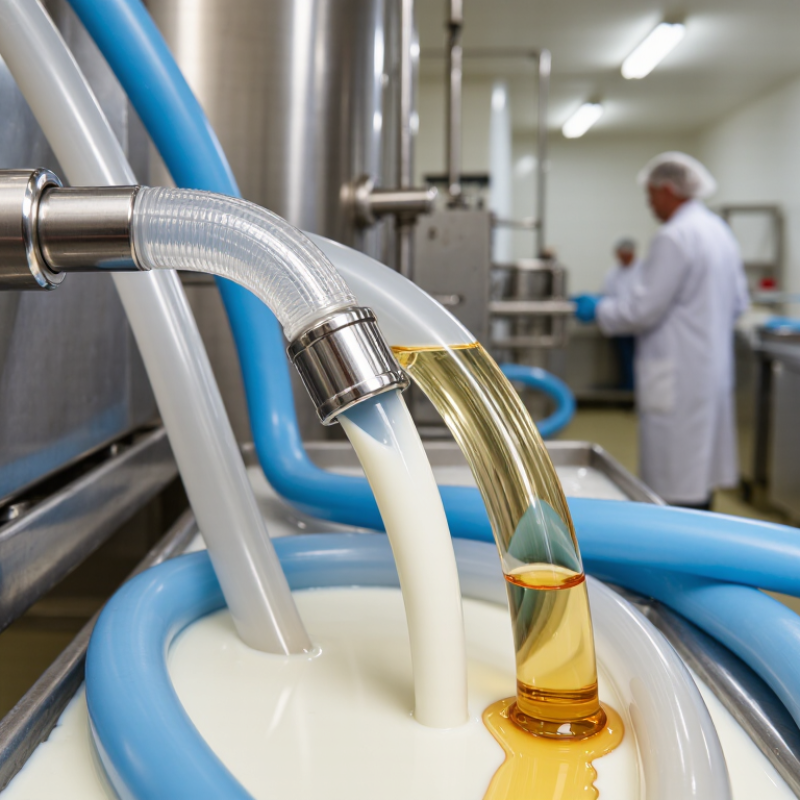
Choosing Food Grade Silicone Hose: Understanding Food-Grade Silicone Hose Standards
Food-grade silicone hose should meet the requirements of its intended application. Material safety is only one part of the decision. Check whether the hose complies with relevant food-contact rules, such as FDA 21 CFR 177.2600 or applicable European requirements. Ask for a current declaration of compliance. A vague certificate is not enough.
Look for migration testing, batch traceability, and clear temperature limits. The document should identify the silicone formulation, curing method, and test conditions. Platinum-cured silicone often supports cleaner processing, but curing alone does not prove food-contact compliance. Hose diameter, wall thickness, pressure rating, and vacuum resistance also matter. A hose can be safe for ingredients yet fail under repeated heat cycles.
Inspect the surface carefully. It should be smooth, non-porous, and free from cracks, sharp seams, or trapped particles. Transparent tubing helps operators notice residue, although visibility can reduce after prolonged use. Clean-in-place procedures must match the hose’s temperature and chemical limits. Do not assume a general cleaning agent is harmless. One practical lesson is easily missed: fittings can introduce more contamination risk than the hose itself. Use compatible sanitary connections and inspect them regularly. Records should include installation dates, cleaning cycles, and replacement reasons. These details may seem excessive, but they reveal weak points. Standards guide the choice; actual operating conditions decide whether that choice remains reliable.
Material purity determines whether a silicone hose is truly suitable for food contact. Ask for the silicone grade, curing method, and full batch traceability. Platinum-cured silicone usually leaves fewer catalyst residues than peroxide-cured material, but it is not automatically safer. Check the actual test report.
The U.S. FDA’s 21 CFR 177.2600 lists extractables limits for specified repeated-use rubber articles, including 175 mg/in² for distilled water and 4 mg/in² for n-hexane. These figures are useful screening references, not universal approval. Under EU food-contact testing frameworks, the commonly applied overall migration limit is 10 mg/dm², where applicable. A supplier should identify the test liquid, temperature, exposure time, and hose surface area.
Do not accept a certificate with only a product name. Request migration, extractables, heavy-metal, and volatile-residue results from an accredited laboratory. During inspection, cut the hose and examine the inner wall. It should feel smooth, without oily films, pinholes, pigment streaks, or a sharp chemical smell. A strong odor is a warning.
I would also test the first production lot after cleaning and heat exposure. That step is often missed. In practice, repeated hot-water cycles can reveal residues that a new hose hides. Documentation may look complete, yet the report could cover a different batch or wall thickness. Verify every detail.
Food-grade silicone hose selection starts with the process, not the catalogue.
Match the internal diameter to actual flow demand. An undersized hose increases velocity, friction, and cleaning time. An oversized hose may drain poorly and trap residue.
Tip 1: Measure the fitting’s inner diameter.
Tip 2: Check required flow, not only connection size.
Tip 3: Confirm bend radius around pumps and valves.
A perfect chart cannot replace a site trial.
Temperature and pressure need separate checks. The 2022 U.S. FDA Food Code specifies cold holding at 41°F (5°C) or below, and hot holding at 135°F (57°C) or above. These food temperatures do not define hose limits.
Tip 4: Record continuous, peak, cleaning, and sterilization temperatures.
Tip 5: Compare working pressure with surge pressure.
Hygiene also depends on geometry. EHEDG hygienic design guidance stresses cleanable surfaces, drainage, and reduced dead spaces.
Tip 6: Choose a smooth, reinforced construction when vacuum or pressure pulses occur.
Tip 7: Verify food-contact documentation, lot traceability, and cleaning compatibility.
I have seen teams size hoses by fitting diameter alone. That shortcut looked efficient, but cleaning performance suffered.
Check every joint after installation. A small offset can create a residue pocket, even when the hose itself meets the specification.
7 Tips for Choosing Food Grade Silicone Hose
Flexibility affects both hygiene and installation speed. A hose should bend without kinking around pumps, tanks, or filling heads. Check the manufacturer’s minimum bend radius, not only the stated temperature range. ASME BPE guidance commonly uses 0.51 micrometres Ra for highly polished product-contact surfaces, but flexible tubing can behave differently. A smooth-looking bore is not enough. Tip 1: Bend a sample around the real equipment. Tip 2: Reject tubing that whitens, flattens, or twists. I once underestimated a tight corner. The hose failed early.
Fittings must match the hose wall and cleaning method. Tri-clamp connections are practical, but poor alignment can create stress at the ferrule. FDA 21 CFR 177.2600 covers repeated-use rubber articles, including extractive limits for food-contact applications. Verify the exact silicone formulation and compliance statement. Do not rely on “food grade” alone. Tip 3: Measure inside diameter, outside diameter, and wall thickness. Tip 4: Choose fittings with minimal dead space. EHEDG hygienic-design guidance also emphasizes drainability and cleanable joints. A short, sloped run is safer than a hanging loop.
Installation details often decide service life. Support long sections without crushing them. Keep hoses away from sharp frames and hot surfaces. Tip 5: Use wide-radius clamps. Tip 6: Leave enough length for thermal movement. Tip 7: Inspect after the first cleaning cycle. Some advice feels obvious, yet it is often skipped. Recheck the design after installation; real equipment rarely matches the drawing perfectly.
Flexibility, fitting compatibility, and installation space are key selection factors. The chart shows representative minimum bend-radius values as multiples of the hose inside diameter.
Unreinforced silicone tubing is generally the most flexible, while braided and wire-reinforced constructions require more installation space. Use food-contact-approved clamps or sanitary fittings, match the fitting size to the hose inside diameter, avoid sharp bends near connections, and confirm the exact bend radius with the hose specification before installation.
7 Tips for Choosing Food Grade Silicone Hose
Inspecting Quality, Maintenance, and Supplier Reliability
Food-grade silicone hose should feel uniform, flexible, and free from pinholes, cloudy streaks, or embedded particles. Check the inner bore under bright light; rough areas can trap milk residue and encourage biofilm. The hose should have documented temperature, pressure, and chemical-resistance limits. “Food grade” alone is not enough. Ask for migration-test results, lot numbers, and certificates that match the actual hose supplied.
Maintenance begins with the cleaning method, not the purchase order. Confirm whether the hose tolerates steam, alkaline cleaners, acids, and repeated bending. WHO estimates that contaminated food causes about 600 million illnesses and 420,000 deaths globally each year. That figure makes sanitation controls more than a paperwork exercise (WHO, Estimates of the Global Burden of Foodborne Diseases, 2015). Inspect hose ends, clamps, and seals after every cleaning cycle. Small cracks often appear there first. Replace sections showing swelling, permanent flattening, or discoloration.
Supplier reliability needs evidence. Request traceability records, inspection procedures, storage conditions, and realistic delivery data. The FDA Food Code 2022 requires food-contact surfaces to be smooth, corrosion-resistant, and easily cleanable. A supplier should explain how its hose supports those requirements. Do not rely on polished samples alone. A perfect sample can hide inconsistent production. A checklist helps, but it can still miss poor warehouse handling or delayed technical support. Ask difficult questions, record the answers, and review performance after installation.
| No. | Selection Tip | What to Inspect | Practical Acceptance Criteria | Maintenance Guidance | Supplier Reliability Check |
|---|---|---|---|---|---|
| 1 | Confirm the Silicone Grade | Check the material declaration, product specification, and intended food-contact application. | The hose should be manufactured from silicone intended for food-contact use and supported by applicable regulatory or migration documentation for the target market. | Use only approved cleaning agents and avoid contact with chemicals that are not listed as compatible by the manufacturer. | Request current compliance documents, technical data sheets, and batch traceability information before purchasing. |
| 2 | Match Temperature and Pressure Ratings | Compare operating temperature, pressure, vacuum, fluid temperature, and cleaning conditions with the hose specification. | Select a hose whose published limits exceed the actual operating conditions. Consider pressure reduction at elevated temperatures and avoid using the maximum rating continuously. | Inspect for swelling, hardening, softening, flattening, or surface cracking after thermal or pressure cycles. | Ask for test methods, rating conditions, and technical support for applications involving hot water, steam, or vacuum. |
| 3 | Inspect Construction and Dimensions | Review inner diameter, wall thickness, reinforcement, bend radius, surface finish, and connection compatibility. | Dimensions should remain within the agreed tolerances, with a smooth, uniform bore and no visible bubbles, cuts, pinholes, embedded particles, or uneven wall sections. | Avoid sharp bends, twisting, excessive tension, and unsupported hose weight. Use compatible clamps and fittings. | Request representative samples and verify dimensions with calibrated measuring tools before approving bulk production. |
| 4 | Evaluate Cleanability and Hygiene | Assess internal smoothness, drainage, dead-leg risk, clean-in-place suitability, and resistance to common cleaning procedures. | The design should minimize areas where product can collect. The hose must be compatible with the planned cleaning temperature, concentration, contact time, and rinse process. | Clean and dry the hose according to a documented sanitation procedure. Do not leave stagnant product or cleaning solution inside the hose. | Ask for recommended cleaning parameters and evidence from material-compatibility or hygienic-design testing where relevant. |
| 5 | Check Odor, Taste, and Extractables Risk | Inspect for unusual odor, discoloration, surface residue, or changes in the conveyed product after contact with the hose. | The hose should not introduce unacceptable odor, taste, color, or visible contamination when used under the specified conditions. | Flush and condition the hose as instructed before first use. Replace it if persistent odor, discoloration, or product contamination appears. | Request applicable migration, extractables, or sensory test documentation for the intended food or beverage service. |
| 6 | Create an Inspection and Replacement Plan | Define inspection frequency, hose identification, service history, storage conditions, and replacement triggers. | Inspection records should identify the hose, installation date, application, cleaning cycles, observed defects, and corrective action. | Replace immediately when there are cracks, cuts, exposed reinforcement, permanent deformation, leakage, damaged ends, or loss of flexibility. | Choose a supplier able to provide consistent batch identification, replacement availability, and documented change control. |
| 7 | Verify Supplier Reliability | Review quality controls, production capability, documentation, communication, delivery performance, and complaint handling. | A reliable supplier should provide clear specifications, consistent samples, lot traceability, inspection records, defined tolerances, and a documented process for nonconforming products. | Store spare hose in a clean, dry, shaded location away from ozone sources, oils, sharp edges, and excessive heat. | Evaluate sample-to-production consistency, response time, lead-time accuracy, corrective-action quality, and willingness to support audits or technical reviews. |