Global buyers need more than a polished catalog when selecting a Soft Touch Silicone Hose supplier. They need dependable materials, consistent production, and clear technical evidence. A hose may feel smooth in the hand, yet fail under heat, pressure, bending, or repeated cleaning. That gap deserves attention.
Dr. James E. Mark, a respected polymer scientist, once stated, “Polymer performance depends on structure, processing, and service conditions.” This principle remains highly relevant to silicone hose sourcing. A reliable supplier should explain its silicone grade, hardness range, reinforcement method, temperature limits, and dimensional tolerances. It should also provide traceable test records when required.
The strongest manufacturers understand real operating environments. Their hoses may run through food-processing lines, medical equipment, laboratory systems, or industrial assemblies. Each application demands different priorities. Flexibility alone is not enough. Surface feel, kink resistance, cleanliness, compression recovery, and connection security can affect the final result.
Global purchasing teams should compare production capacity, quality controls, communication speed, packaging, and export experience. Certifications can help, but certificates never replace technical verification. That is an uncomfortable point.
No supplier is perfect. Even experienced manufacturers may show weaknesses in lead times, customization, or documentation. This outline examines leading Soft Touch Silicone Hose suppliers through practical criteria, not advertising claims. It considers product quality, engineering support, compliance awareness, and long-term reliability. Buyers may still need independent testing before approval, especially when failure could interrupt production or compromise sensitive equipment.
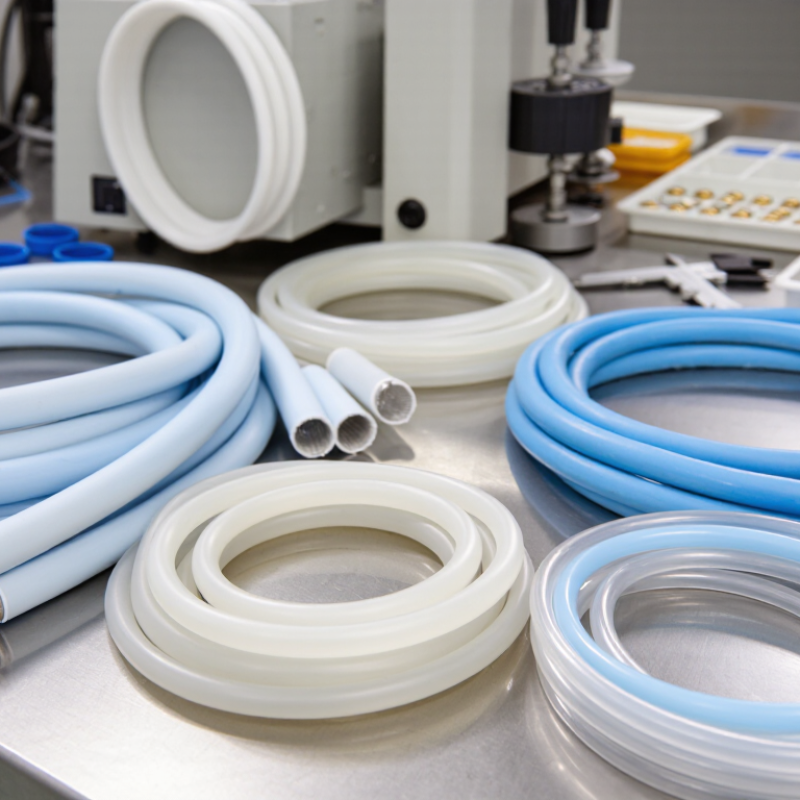
Soft touch silicone hoses are flexible tubes made from silicone elastomer, often with a smooth, slightly cushioned surface. They remain pliable across wide temperature ranges, although performance depends on formulation and wall design. Many products use platinum-cured silicone for cleaner fluid contact and lower extractables. Shore A hardness commonly ranges from about 30 to 70, giving buyers options from gentle pumping lines to firmer industrial connections. Soft does not mean weak.
Their uses are broad. Medical equipment may use them for air, water, or fluid transfer. Food and beverage systems use them around pumps, filling lines, and dispensing equipment. Laboratories value their low-reactivity surface and easy cleaning. Automotive applications include coolant, vacuum, and air-management lines, but reinforcement may be necessary for pressure or vibration. According to Fortune Business Insights’ 2024 silicone market report, the global silicone market was valued at about USD 20 billion in 2023, reflecting strong demand across healthcare, transport, and manufacturing. A 2023 medical tubing analysis by MarketsandMarkets also identified silicone as a major material because of its flexibility and biocompatibility.
Global buyers should check temperature, pressure, bend radius, permeability, and regulatory documentation before comparing suppliers. Surface feel alone proves very little. That is the uncomfortable part. A hose can feel excellent yet fail under repeated heat cycles or aggressive cleaning. Supplier samples should be tested with the actual fluid, fittings, and operating pressure. Certificates, traceability, and batch consistency matter more than attractive catalogue language.
Soft-touch silicone hoses should be judged by more than surface feel. During hose evaluations, I check the silicone grade, curing method, hardness, and reinforcement structure. Platinum-cured silicone often supports cleaner applications. However, it may not suit every temperature or chemical environment. Ask for batch traceability and documented test results.
Design details affect installation and service life. Compare inner-diameter tolerance, wall thickness, bend radius, and cutting quality. A hose that looks flexible may kink near a tight fitting. Check the reinforcement, too. Polyester supports general pressure needs, while aramid may offer greater strength with less stretch. Clear walls can help operators spot trapped air, residue, or flow changes.
Performance claims need practical evidence. Request tested temperature ranges, working pressure, burst pressure, vacuum resistance, and compression-set data. Do not rely on a glossy finish. It can hide weak bonding or uneven walls. I once treated softness as a quality signal, which was a poor shortcut. Supplier evaluation should also include odor, aging after heat exposure, and resistance to ozone, moisture, and compatible fluids. For food, medical, or industrial use, verify the applicable contact requirements and supporting records. Some comparison points remain easy to miss. Ask how samples were conditioned before testing. Fresh samples can perform differently after storage, repeated bending, or thermal cycling.
When evaluating soft touch silicone hose suppliers, look beyond surface softness and attractive samples. A reliable supplier should explain silicone grades, curing methods, wall tolerances, and temperature limits clearly. Ask for test reports covering hardness, tensile strength, pressure resistance, and dimensional stability. Reports should match the exact hose construction, not a similar product.
During supplier audits, inspect production cleanliness, material storage, and batch identification. A printed lot code can make quality issues easier to trace. Request samples from different production batches. One sample may look perfect, but consistency matters more for global purchasing.
Check how the supplier handles tooling changes, rejected products, and corrective actions. Their answers often reveal more than a polished presentation. Packaging also deserves attention; poorly protected coils can arrive flattened or contaminated.
Tips: Compare three suppliers using the same specification sheet. Confirm minimum order quantities, lead times, export packaging, payment terms, and shipping responsibilities in writing. Ask whether the supplier can provide pre-shipment inspection records and technical support across time zones. A lower quotation may hide unstable tolerances or expensive replacement delays. I would not approve a supplier based only on certificates. Factory evidence, repeat samples, and transparent communication create stronger confidence, although no evaluation is completely free from risk.
Top Soft Touch Silicone Hose Suppliers for Global Buyers
International Standards, Customization, and Quality Assurance
Soft-touch silicone hoses support fluid transfer, medical equipment, food processing, and laboratory systems. Global buyers should verify standards before comparing prices. ISO 1307 defines hose dimensions and tolerances, while FDA 21 CFR 177.2600 addresses repeated-use rubber articles contacting food. For sanitary applications, suppliers should provide traceability, curing records, and test reports. These details matter when hoses face heat, pressure, cleaning chemicals, or frequent bending.
Customization should cover inner diameter, wall thickness, length, hardness, color, reinforcement, and connector design. A practical supplier can provide samples before mass production. Grand View Research estimated the global silicone market at about USD 20.8 billion in 2023. Its report also projects strong growth through 2030. However, market forecasts differ by product scope. That is worth remembering. A large market does not guarantee consistent hose quality.
Tips: Request batch-level certificates, not generic brochures. Check tensile strength, elongation, compression set, and temperature resistance. Ask for aging tests after repeated cleaning cycles. Inspect the surface under bright light; tiny bubbles, uneven walls, or oily residue may reveal process weaknesses. Require dimensional inspection records and packaging tests for international shipping. A supplier may meet a standard on paper, yet fail your actual operating conditions. Small pilot orders expose that gap early.
Typical technical ranges used when evaluating international silicone hose suppliers
The chart compares commonly specified performance ranges for soft-touch silicone hoses. Silicone compounds are often selected for flexibility, broad temperature resistance, and application-specific compliance. Actual limits depend on formulation, reinforcement, curing method, dimensions, pressure, and validation testing. Buyers should request technical datasheets, traceability records, and applicable FDA, EU, RoHS, REACH, or ISO documentation before approval.
Global buyers should evaluate soft touch silicone hose suppliers beyond catalog photos. The surface should feel even, flexible, and free from tackiness. Ask for samples before approving bulk production. Check wall thickness, bend recovery, temperature range, and connection size. Small variations can cause costly installation problems.
Shipping terms need equal attention. Confirm production lead time, packaging strength, export documents, and delivery responsibilities in writing. Hoses should be coiled without sharp folds and protected from dust and compression. A supplier that shares inspection photos and tracking updates reduces uncertainty. Air freight may suit urgent orders, while sea freight usually lowers unit logistics costs. Delays still happen.
Pricing should show more than one total figure. Request separate costs for tooling, samples, packaging, freight, and replacement parts. A very low quotation may hide thin walls or weaker quality controls. Ask whether the price changes with silicone grade, color, tolerance, or order volume. After-sales support matters when a shipment arrives with inconsistent dimensions. Confirm response times, evidence requirements, replacement procedures, and technical assistance. The weakest part of many purchasing plans is assuming every issue will be solved quickly. No supplier gets every forecast right. A reliable partner admits limitations, records corrective actions, and improves future batches.
| Supplier Profile | Typical Production Region | Soft-Touch Hose Construction | Common Inner Diameter Range | Temperature Range | Indicative Export Price* | Typical MOQ | Sample Lead Time | Bulk Production Lead Time | Common Shipping Options | Common Trade Terms | Quality and Compliance Documents | Warranty / After-Sales Practice | Best Fit for Global Buyers |
|---|---|---|---|---|---|---|---|---|---|---|---|---|---|
| Profile A | East Asia | Platinum-cured silicone, smooth inner wall, matte or lightly textured outer surface | 6–50 mm | -60°C to +200°C | US$1.80–6.50 per meter | 300–500 meters | 5–10 working days | 20–35 working days | Express courier for samples; ocean freight for production orders | FOB, CIF, FCA | Material data sheet, batch inspection report, dimensional report; FDA or EU food-contact documentation available for selected grades | Usually 12 months against manufacturing defects; replacement or credit is commonly offered after inspection | Food-processing lines, beverage equipment, laboratory connections, and general fluid transfer |
| Profile B | South Asia | Flexible silicone tubing with reinforced braid options and custom cut lengths | 8–100 mm | -50°C to +180°C | US$2.20–8.80 per meter | 200–400 meters | 7–12 working days | 25–40 working days | Air freight for urgent orders; consolidated ocean freight for regular shipments | EXW, FOB, CIF | Dimensional inspection, hardness report, tensile test data, and certificate of conformity when requested | Typically 6–12 months; technical support is generally provided for fitting, hardness, and application selection | OEM assemblies, replacement tubing, and buyers requiring moderate customization |
| Profile C | East Asia | High-purity platinum-cured silicone with low-odor, low-extractable, soft-touch finish | 3–76 mm | -60°C to +200°C | US$3.50–14.00 per meter | 100–300 meters | 7–14 working days | 30–45 working days | Courier or air freight for validation samples; temperature-controlled handling may be arranged when required | FCA, FOB, CIP | Lot traceability, extractables information, biocompatibility or food-contact documents for applicable grades, and sterilization guidance | Usually 12 months; complaint review is supported by lot records and retained samples | Pharmaceutical, bioprocessing, laboratory, and high-purity applications |
| Profile D | Southeast Asia | General-purpose silicone hose with smooth bore, translucent appearance, and optional textile reinforcement | 10–150 mm | -40°C to +180°C | US$2.00–9.50 per meter | 500–1,000 meters | 5–8 working days | 20–30 working days | Ocean freight, regional trucking, and air freight for small urgent quantities | FOB, CIF, DAP | Certificate of conformity, visual inspection report, hardness data, and packing list; additional testing may carry a fee | Commonly 6 months; replacement claims normally require photos, samples, and batch information | Industrial maintenance, automotive auxiliary systems, air ducts, and cost-sensitive projects |
| Profile E | Europe | Premium soft silicone hose with tight dimensional control, colored identification, and engineered reinforcement options | 5–80 mm | -60°C to +200°C | US$7.00–24.00 per meter | 50–150 meters | 10–20 working days | 35–60 working days | Road freight within Europe; air freight and ocean freight for intercontinental orders | EXW, FCA, DAP | Full technical data sheet, traceability records, dimensional inspection, and application-specific compliance package | Often 12–24 months depending on application; structured technical review and corrective-action support are typically available | Regulated industries, high-value equipment, and projects prioritizing documentation and consistency |
| Profile F | North America | Custom-engineered silicone hose assemblies with molded ends, clamps, bends, and application-specific reinforcement | 6–125 mm | -55°C to +200°C | US$8.00–35.00 per meter | 25–100 assemblies | 10–25 working days | 40–70 working days | Domestic ground freight, expedited air freight, and ocean freight for overseas replenishment | FCA, DAP, DDP for selected destinations | Assembly drawings, pressure-test records, material certificates, inspection reports, and engineering change documentation | Typically 12 months; application review, replacement parts, and remote troubleshooting may be included | Low-volume custom assemblies, aftermarket service, and buyers needing local technical coordination |