Inquiry
Form loading...
China’s silicone industry has become a significant source for automotive, industrial, medical, and consumer components. This guide examines China’s top 10 Silicone Straight Hose manufacturers through practical purchasing criteria. These include material quality, pressure resistance, temperature range, reinforcement design, dimensional accuracy, and export experience.
A Silicone Straight Hose may look simple, but small differences matter. A poorly controlled inner diameter can cause leaks. Weak curing can create cracks near clamps. Reliable manufacturers should provide silicone-grade information, hardness data, production samples, and inspection records. Dr. W. M. Lee, a recognized silicone rubber researcher, has emphasized: “Silicone rubber performance depends on formulation and processing, not merely on its chemical name.” That principle remains useful when comparing factories.
This ranking should not be treated as absolute. No list is perfect. A supplier may appear strong online but respond slowly during technical discussions. Another factory may have fewer marketing materials but better testing discipline. Therefore, the selection considers verifiable capabilities, factory experience, customization support, quality systems, and customer-facing reliability. Site audits and sample testing remain valuable.
Look beyond price.
The strongest Silicone Straight Hose suppliers usually explain their production limits clearly. They discuss wall thickness, bend radius, connector compatibility, and working conditions without vague promises. Readers should also confirm packaging, lead times, certificates, and after-sales support before placing orders. This approach creates a more balanced comparison for engineers, distributors, and purchasing teams seeking dependable Chinese manufacturers.
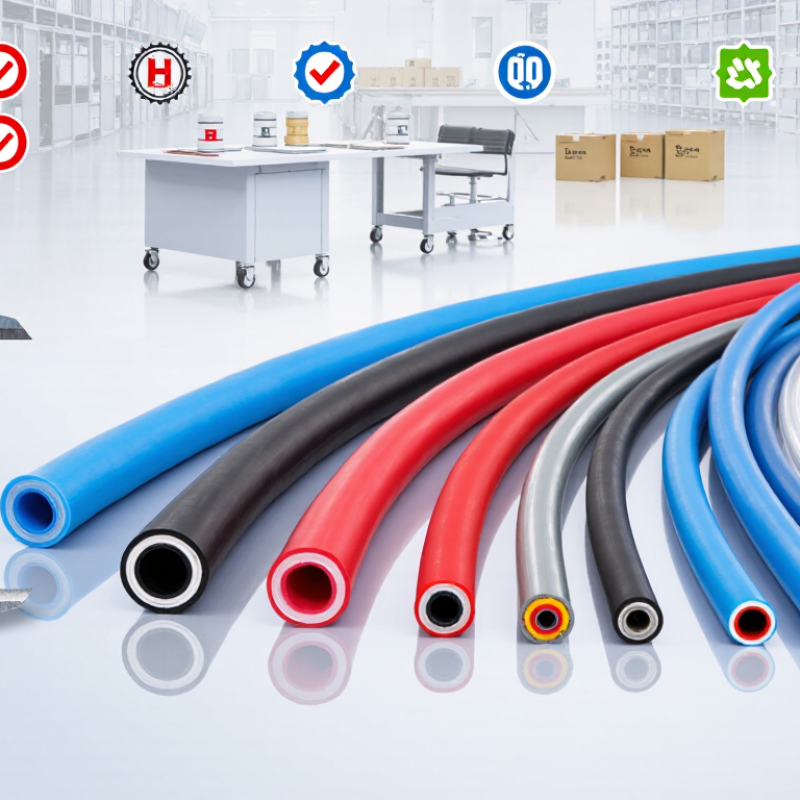
What Are Silicone Straight Hoses and Where Are They Used?
Silicone straight hoses are flexible tubes with a uniform, non-bent shape. They are usually cut to length and secured with clamps or couplers. Their smooth inner wall supports steady airflow and coolant movement. They also tolerate wide temperature changes, vibration, and repeated movement. No elbows. That simplicity matters in tight engine bays and industrial layouts.
Common uses include radiator lines, charge-air systems, vacuum connections, air-intake routing, and laboratory equipment. Food-processing and pharmaceutical facilities may also select compliant silicone tubing for controlled fluid transfer. Material choice still requires care. Silicone can perform well with heat and air, but it may not suit every fuel, oil, or abrasive chemical.
The International Energy Agency reported nearly 14 million electric-car sales worldwide in 2023. This growth increases demand for reliable thermal-management components, including coolant hoses around batteries and power electronics. A 2023 global silicone market assessment also estimated the material market at roughly 18 billion US dollars, with annual growth near 6 percent through 2030. These figures indicate expanding demand, not automatic suitability. Engineers should check temperature, pressure, bend radius, fluid compatibility, and standards such as ISO 1629 or ASTM D2000. In practice, a slightly oversized hose can sag, while an undersized one may restrict flow. That small detail is often overlooked.
| No. | Typical Hose Category | Typical Inner Diameter | Common Wall Construction | Typical Temperature Range | Common Fluids or Media | Typical Applications | Important Selection Consideration |
|---|---|---|---|---|---|---|---|
| 1 | General-Purpose Silicone Straight Hose | 6–51 mm | Unreinforced silicone | Approximately −50°C to 180°C | Air, water, and low-pressure fluids | Laboratory equipment, light-duty machinery, and general fluid transfer | Choose the correct diameter and avoid applications requiring high pressure or high abrasion resistance. |
| 2 | Automotive Coolant Straight Hose | 16–60 mm | Single- or multi-layer silicone | Approximately −50°C to 180°C | Engine coolant and water-glycol mixtures | Radiator connections, expansion tanks, and cooling circuits | Confirm compatibility with the coolant formulation, pressure, and engine-bay temperature. |
| 3 | Turbocharger and Charge-Air Hose | 38–102 mm | Reinforced multi-layer silicone | Approximately −50°C to 180°C | Pressurized intake air and oil-mist-containing air | Turbocharger, intercooler, and air-intake connections | Use reinforced construction for boost pressure and select a hose with adequate burst-pressure margin. |
| 4 | Industrial Compressed-Air Hose | 6–51 mm | Fabric-reinforced silicone | Approximately −50°C to 180°C | Compressed air and inert gases | Pneumatic equipment, instrumentation, and process-air systems | Working pressure depends on diameter, reinforcement, temperature, and fitting design. |
| 5 | Food and Beverage Transfer Hose | 10–76 mm | Platinum-cured silicone | Approximately −60°C to 180°C | Water, beverages, dairy products, and liquid food ingredients | Food processing, beverage filling, and sanitary transfer systems | Verify food-contact compliance, surface finish, cleanability, and the required sanitation method. |
| 6 | Pharmaceutical and Bioprocess Hose | 6–51 mm | High-purity platinum-cured silicone | Approximately −60°C to 180°C | Buffers, purified water, biological fluids, and process solutions | Single-use assemblies, laboratory processing, and pharmaceutical production | Check extractables, leachables, sterilization compatibility, and batch traceability requirements. |
| 7 | Vacuum and Suction Hose | 13–102 mm | Corrugated or spiral-supported silicone | Approximately −50°C to 180°C | Air, vapors, powders, and light liquids | Vacuum lines, fume extraction, and material-handling systems | The hose must resist collapse under vacuum; bend radius and support spacing are critical. |
| 8 | High-Temperature Air-Duct Hose | 25–152 mm | Fabric-reinforced silicone-coated tube | Approximately −50°C to 260°C | Hot air, exhaust-adjacent air, and drying air | Industrial dryers, ventilation, engine compartments, and thermal-air systems | Actual temperature rating depends on continuous exposure, airflow, and reinforcement materials. |
| 9 | Electrical Insulation and Cable-Protection Hose | 6–51 mm | Non-reinforced insulating silicone | Approximately −60°C to 200°C | Not intended primarily for fluid transfer | Wire protection, electrical insulation, and thermal shielding | Confirm dielectric strength, flame behavior, wall thickness, and resistance to mechanical damage. |
| 10 | Chemical-Resistant Process Hose | 6–51 mm | Thick-wall or reinforced silicone | Approximately −50°C to 180°C | Selected dilute chemicals, water-based solutions, and laboratory fluids | Laboratories, chemical processing, and analytical equipment | Chemical compatibility must be confirmed for the exact concentration, temperature, and exposure time. |
Note: Silicone hose ratings are typical industry ranges rather than universal specifications. Actual performance depends on silicone formulation, reinforcement, dimensions, fittings, pressure, temperature, sterilization, and the intended medium. Always verify the supplier's technical datasheet before selection.