Rubber Hose Heat Resistance describes a hose’s ability to carry hot fluids without losing strength, flexibility, or sealing performance. It is not simply a temperature number printed beside a product code. Heat travels through the tube, reinforcement, cover, fittings, and surrounding air. A hose carrying oil at 150°C may fail differently from one carrying water at the same temperature.
ISO 8330 defines terminology for rubber and plastics hoses, while ISO 1307 addresses hose dimensions and tolerances. Parker’s Industrial Hose Catalog and Gates’ industrial hose data also show that temperature ratings depend on the hose compound, fluid, pressure, and exposure time. Smithers’ rubber industry reports identify heat-resistant compounds as important for demanding industrial applications. These sources support a practical point: ratings must be matched to real operating conditions, not copied from a general chart.
Rubber scientist John S. Dick has emphasized, “Temperature is one of the most important factors affecting rubber performance.” That principle remains easy to underestimate. A hose may look normal outside while its inner tube hardens, cracks, or swells. Repeated heating and cooling can accelerate this damage. Pressure makes the risk worse.
A proper evaluation checks continuous temperature, peak temperature, fluid compatibility, pressure, bending, and installation clearance. The temperature rating is only one piece. It is not a guarantee.
In field inspections, small surface cracks around a hot fitting often deserve immediate attention. Still, visual checks cannot replace laboratory testing or manufacturer confirmation. Test results may also vary, especially when the actual fluid, pressure pulses, or airflow differ from the test setup. A reliable Rubber Hose Heat Resistance decision therefore combines standards, supplier data, documented experience, and honest review of uncertainty.
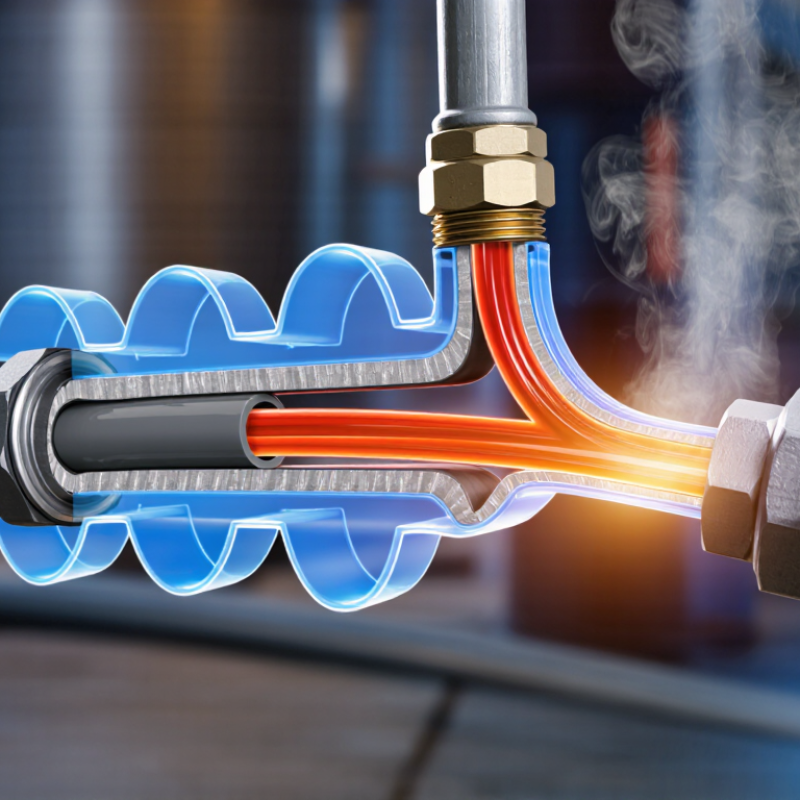
Rubber hose heat resistance is the ability to tolerate elevated temperatures while retaining flexibility, strength, sealing, and dimensional stability. It is not simply the highest temperature printed on a datasheet. A hose may survive brief contact with hot fluid but fail during continuous exposure.
ASTM D573 and ISO 188 evaluate rubber aging through controlled heat exposure. A common benchmark uses 70°C for 168 hours, followed by tensile strength and elongation measurements. These figures reveal how much performance the rubber loses after heating. For example, a hose with excellent initial flexibility may become hard, cracked, or brittle after repeated thermal cycles. That change matters near engines, molds, steam lines, and industrial ovens.
Heat resistance also protects the hose system. Excessive temperature can weaken the tube, soften the cover, damage reinforcement, and reduce pressure capacity.
Internal fluid temperature, external radiant heat, pressure, bend radius, and exposure time must be assessed together. Field technicians often inspect discoloration, surface blisters, and stiffness before visible leakage begins.
A stated maximum temperature usually assumes controlled conditions. Real installations are less tidy. Short heat spikes, trapped pressure, and tight bends may reduce service life faster than laboratory testing suggests. I would treat a temperature rating as a design limit, not a guarantee. The most reliable selection compares test data with actual operating records, including peak temperature and duty cycle.
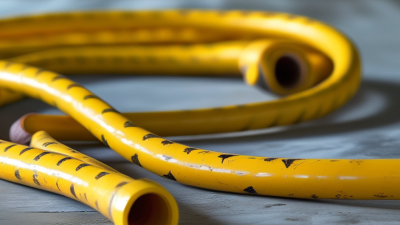
What Is Rubber Hose Heat Resistance?
Rubber hose heat resistance is not a single temperature rating. It describes how the tube, reinforcement, and cover behave as heat rises. A hose may remain flexible at 120°C, yet lose pressure strength after repeated exposure. Material choice matters. EPDM often handles hot water and steam better than many general-purpose rubbers. Fluorocarbon compounds usually resist oils at elevated temperatures. These are tendencies, not guarantees. Construction, pressure, fluid chemistry, and bend radius also affect performance.
Laboratory aging provides useful evidence. ISO 188 and ASTM D573 commonly expose rubber specimens to air at 70°C for 168 hours. Technicians then measure hardness, tensile strength, and elongation changes. A slight hardness increase can signal early embrittlement. It may feel harmless at first. In service, a hose beside an engine can experience radiant heat, vibration, and pressure pulses together. SAE J20 includes coolant-hose classes tested at elevated temperatures, with selected constructions evaluated around 125°C. That temperature does not mean unlimited continuous operation.
Inspect the hose for surface cracks, gloss loss, softened areas, and permanent swelling. Measure nearby air temperature, but do not ignore the fluid temperature inside the hose. Technical data can underrepresent installation mistakes. That is the uncomfortable part. A cooler-rated hose, sharp bend, or loose clamp can defeat a strong compound. Check the test conditions against the real duty cycle, including peak temperature and exposure duration.
| Rubber Material | Typical Continuous Service Temperature | Typical Intermittent Peak Temperature | High-Temperature Response | Typical Strengths | Important Limitations |
|---|---|---|---|---|---|
| Natural Rubber (NR) | Up to approximately 80–90°C | Approximately 100°C | Softens and loses strength as temperature rises; accelerated aging can occur during prolonged heat exposure. | Excellent elasticity, abrasion resistance, vibration absorption, and flexibility. | Poor resistance to hot air, ozone, petroleum oils, and many chemicals. |
| Styrene-Butadiene Rubber (SBR) | Approximately 80–100°C | Approximately 110°C | Becomes harder and less elastic after extended exposure to elevated temperatures. | Good abrasion resistance and economical general-purpose performance. | Limited resistance to oils, ozone, weathering, and sustained high heat. |
| Nitrile Rubber (NBR) | Approximately 100–120°C | Approximately 130–135°C | Retains useful mechanical properties at moderate heat, but prolonged exposure can cause hardening and cracking. | Good resistance to petroleum oils, fuels, and hydraulic fluids. | Poor ozone and weathering resistance unless specially compounded; not ideal for steam. |
| Chloroprene Rubber (CR) | Approximately 90–110°C | Approximately 120°C | Generally maintains flexibility under moderate heat, while long-term exposure may increase hardness and reduce tensile strength. | Good weathering, ozone, flame, and moderate oil resistance. | Lower high-temperature capability than EPDM, silicone, or fluoroelastomers. |
| EPDM Rubber | Approximately 130–150°C | Approximately 160°C | Performs well in hot air, water, and steam; excessive heat eventually causes hardening, embrittlement, and loss of elasticity. | Excellent resistance to ozone, weathering, hot water, steam, and glycol-based fluids. | Generally unsuitable for petroleum oils, fuels, and many hydrocarbon fluids. |
| Silicone Rubber (VMQ) | Approximately 180–200°C | Approximately 220–230°C | Maintains flexibility across a wide temperature range, although tensile strength and tear resistance are lower than many organic rubbers. | Excellent hot-air resistance, flexibility, low-temperature performance, and electrical insulation. | Limited resistance to abrasion, tearing, concentrated acids, fuels, and many oils. |
| Fluoroelastomer (FKM) | Approximately 200–230°C | Approximately 250°C | Offers strong resistance to thermal aging and maintains sealing performance in many high-temperature chemical environments. | Excellent resistance to fuels, oils, many chemicals, and high-temperature oxidation. | Expensive; limited low-temperature flexibility and unsuitable for some hot-water, steam, and polar-fluid applications. |
| Thermoplastic Polyurethane (TPU) | Approximately 80–100°C | Approximately 110–125°C | Can soften at elevated temperatures and may suffer permanent deformation under high pressure or continuous load. | Excellent abrasion, tear, and oil resistance with high flexibility. | Heat capability is formulation-dependent; prolonged heat can reduce hardness and dimensional stability. |
Note: The temperature ranges are typical engineering guidelines for rubber compounds, not universal hose ratings. Actual limits depend on hose construction, reinforcement, pressure, fluid compatibility, exposure duration, bending, and the manufacturer’s tested specification. The maximum allowable temperature should always be selected together with the working pressure and service medium.
What Is Rubber Hose Heat Resistance?
Temperature Ratings and Performance Limits of Rubber Hoses
Rubber hose heat resistance describes how well a hose carries fluid under elevated temperatures. The rating is not a single universal number. It depends on the rubber compound, reinforcement, fluid type, pressure, and exposure time. A hose may tolerate 100°C air temperature but perform differently with hot oil or steam. Check the temperature rating for the actual service fluid, not air alone.
Many general-purpose rubber hoses operate between about -40°C and 100°C. Specialized designs may handle 150°C or higher, while steam hoses require separate, stricter ratings. Heat can soften rubber, weaken reinforcement, and accelerate aging. Pressure capacity often falls as temperature rises. The hose may look normal outside. Damage can develop inside.
Field inspection should include cracks, surface hardening, blisters, and unusual swelling. Do not bend a hot hose sharply. Keep it away from exhaust surfaces and direct radiant heat. Short exposure may be acceptable, but repeated heating and cooling can reduce service life. It is easy to trust a printed rating too much. Real installations include vibration, pressure pulses, tight bends, and chemical contact. These conditions can make the effective limit lower. Installation records and regular inspection provide more reliable control than temperature numbers alone. When conditions change, reassess the hose instead of assuming the original rating still applies.
What Is Rubber Hose Heat Resistance?
Rubber hose heat resistance describes how well a hose maintains strength, flexibility, and sealing performance at elevated temperatures. The rating usually refers to continuous service, not repeated temperature spikes. A hose exposed to hot oil at 120°C may fail sooner than one carrying dry air at the same temperature. The fluid changes the result.
Factors That Reduce a Rubber Hose’s Heat Resistance
Excessive temperature is only one part of the problem. Internal pressure stretches the rubber and accelerates aging, especially near the upper temperature limit. Repeated bending creates friction and small cracks. Tight routing can make this worse. It may look harmless.
Chemicals can also attack the rubber compound. Oil, solvents, cleaning fluids, and certain gases may soften the inner tube or make it brittle. Steam is particularly demanding because heat and moisture penetrate the hose structure. Poor ventilation adds another burden. Heat trapped beside an engine, furnace, or exhaust line can raise the hose temperature far above the surrounding air.
Sunlight, ozone, and long storage periods gradually reduce flexibility. A hose stored beside a window may develop surface cracks before installation. Incorrect fittings can crush the tube and create local hot spots. Practical inspections should check discoloration, swelling, hardening, blisters, and exposed reinforcement. Temperature readings should be taken at the hose surface during actual operation, not only from a control panel.
Selecting a hose requires comparing temperature, pressure, fluid compatibility, movement, and routing conditions together. Safety margins matter, although they are sometimes overlooked during replacement work. Manufacturer data and application-specific testing remain more reliable than appearance alone.
Heat resistance is a rubber hose’s ability to maintain its strength, flexibility, sealing performance, and service life at elevated temperatures. The chart shows representative maximum continuous service temperatures for common rubber compounds.
Excessive temperature, pressure, chemical exposure, oxidation, repeated flexing, and prolonged heat aging can accelerate hardening, cracking, swelling, or loss of mechanical strength. Actual limits depend on the hose construction, compound formulation, pressure, and operating conditions.
Rubber hose heat resistance describes how well a hose carries hot fluids without losing strength, flexibility, or sealing performance. The published temperature limit is not a universal promise. It depends on the fluid, pressure, exposure time, and surrounding heat. Steam, oil, hot water, and dry air can affect the same rubber compound differently. Heat changes everything.
Select a hose by checking its continuous and intermittent temperature ratings. Match the tube material to the conveyed medium, then confirm pressure capacity at the working temperature. Heat often reduces pressure resistance. Allow a safety margin near ovens, engines, and radiant metal surfaces.
Check the required bend radius, connection type, and inner diameter. A hose that kinks may fail before reaching its rated temperature. Use current technical data, not an old label or a rough guess.
Use heat-resistant sleeves or shields when radiant heat is unavoidable. Keep the hose away from sharp edges and moving parts. Avoid hot floors. During inspections, look for blisters, hardened sections, cracks, swelling, and flattened areas. Replace questionable hose early.
In practical inspections, users often focus only on maximum temperature. That mistake can hide pressure and chemical risks. Real service conditions can change, so record temperatures and inspect more often after startup. A careful selection may still need adjustment.